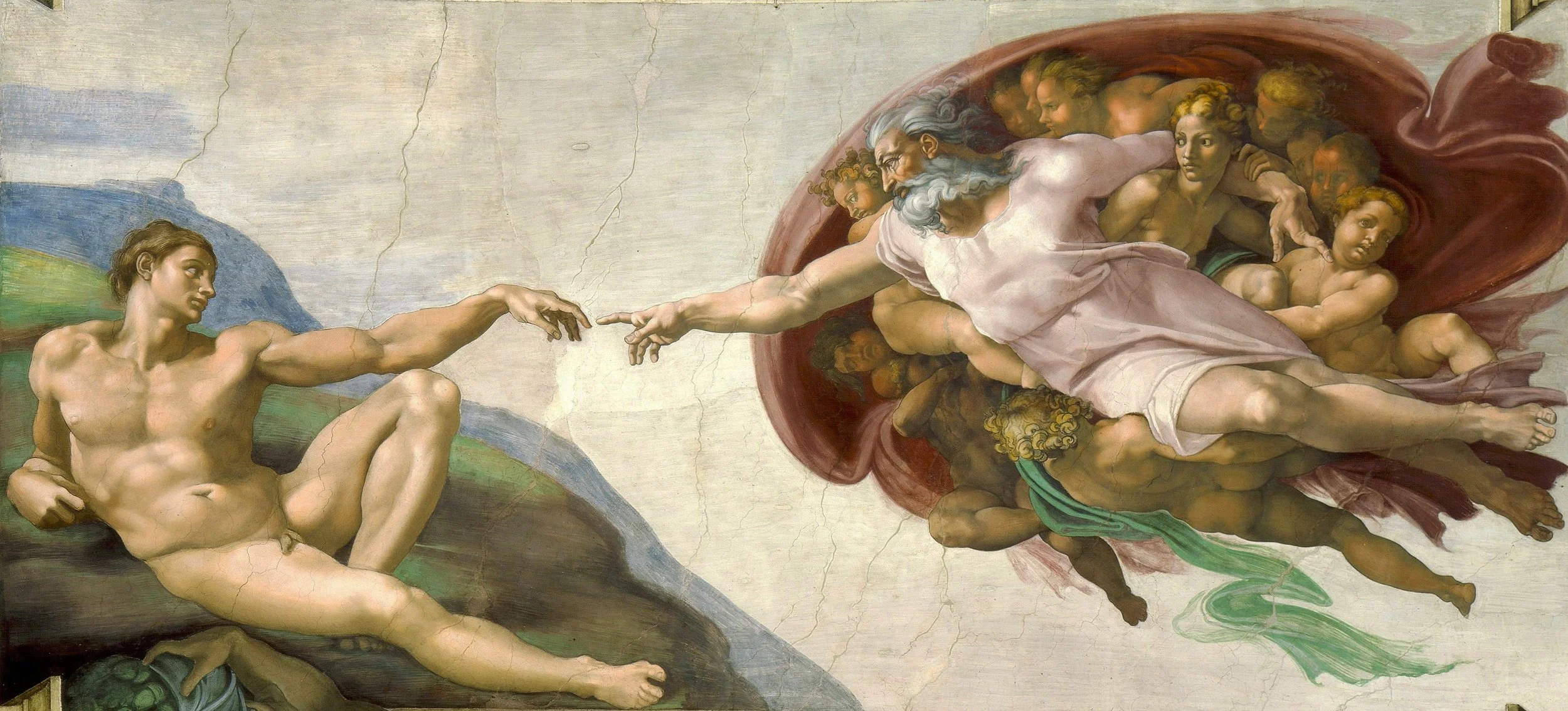
Why the Cleverest Person in the Room Is Often the Least Interesting One
A mildly irreverent, thoroughly researched tour through intelligence, creativity, and the curious gap between knowing everything and imagining anything
Let me begin with a confession. I once sat in a design meeting alongside someone with a PhD in cognitive psychology and an IQ that could, by all accounts, make a chess grandmaster feel mildly insecure. His ideas were technically impeccable, beautifully reasoned, and mind-numbingly dull. Every single one. He produced something that looked like an instruction manual for a Soviet-era refrigerator. Accurate. Logical. Utterly lifeless.
This is not an unusual story. And it raises a question that has occupied psychologists, neuroscientists, educators, and the occasional confused designer for well over a century: what exactly is the relationship between intelligence and creativity? Are they the same thing in different clothes? Are they rivals? Or are they, as the evidence increasingly suggests, rather like a long-married couple who adore each other but occasionally drive each other absolutely mad?
Sir Ken Robinson — the late, great education thinker and the most-watched TED Talk speaker in history — put it with characteristic elegance: “If you’re not prepared to be wrong, you’ll never come up with anything original.” He had a follow-up observation that stings even harder: “We don’t grow into creativity, we grow out of it. Or rather, we get educated out of it.” Robinson spent decades arguing that our school systems are brilliantly designed to produce competent, well-graded graduates, and catastrophically bad at nurturing the creative minds the modern world actually needs. (Robinson, 2006; Robinson, 2011)
He was right. And the neuroscience is now beginning to explain precisely why.

Intelligence: A Lamp in a Familiar Room
The story of intelligence measurement begins, as so many uncomfortable stories do, with the Victorians. Francis Galton — polymath, statistician, and enthusiastic measurer of practically everything (and originator of the concept of eugenics)— was the first to attempt a scientific study of individual differences in mental ability in the 1880s. He was wrong about the method but planted the seed. Alfred Binet built on this at the turn of the 20th century to produce the first practical intelligence test — designed, in a lovely twist, not to rank the gifted but to identify children who needed extra educational support. Binet never intended his test to be a permanent label. He'd be appalled by what happened next.
What happened next was Lewis Terman, also a proponent of eugenics, at Stanford, who adapted Binet's test, coined the Intelligence Quotient, and turned human potential into a three-digit number that would shape careers and self-images for generations.
So what is intelligence, actually? The most durable definition comes from a 1994 editorial signed by 52 mainstream researchers: intelligence is
"a very general mental capability that, among other things, involves the ability to reason, plan, solve problems, think abstractly, comprehend complex ideas, learn quickly, and learn from experience" (Gottfredson et al., 1994).
Robert Sternberg added critical nuance with his Triarchic Theory, framing intelligence as analytical (academic problem-solving), creative (adapting to novelty), and practical (real-world judgment) (Sternberg, 1985).
The most useful shorthand: intelligence is the capacity to process, organise, and apply information efficiently and accurately. It converges. It narrows to the right answer. Philosophically, it is a lamp — precise, directional, illuminating the territory immediately in front of you with admirable clarity. The trouble is, a lamp is only useful when you already know which room you're in.
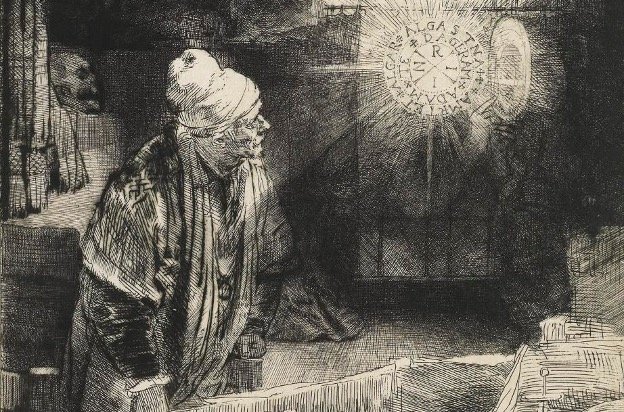
The Types of Intelligence: A Pocket Guide
Fluid Intelligence (Gf): Raw reasoning. Pattern recognition. What you bring to a novel problem with no prior knowledge. Peaks in your mid-twenties, then quietly sulks.
Crystallised Intelligence (Gc): Accumulated knowledge built through education and experience. Wine improves with age. So does Gc.
Working Memory (Gwm): The cognitive scratchpad — how much you can hold and manipulate at once. Strongly correlated with fluid intelligence (Carroll, 1993).
Processing Speed (Gs): How fast you think. Arthur Jensen controversially demonstrated strong links between simple reaction time and IQ scores.
Spatial Intelligence (Gv): Mental rotation, visual reasoning. Architects, surgeons, and Tetris champions are profoundly grateful for this one.
Gardner’s Extended Family: Howard Gardner’s 1983 Theory of Multiple Intelligences proposed eight distinct intelligences — including musical, bodily-kinaesthetic, interpersonal, and naturalistic varieties (Gardner, 1983). Much mocked by psychometricians for being ‘too loose,’ his framework did something vital: it forced the field to ask what ‘smart’ really means. Robinson was a fervent admirer. “Intelligence is dynamic,” Robinson argued, “interactive, and distinct in every individual. The idea that some people just aren’t intelligent is one of the great myths of our time” (Robinson, 2006).
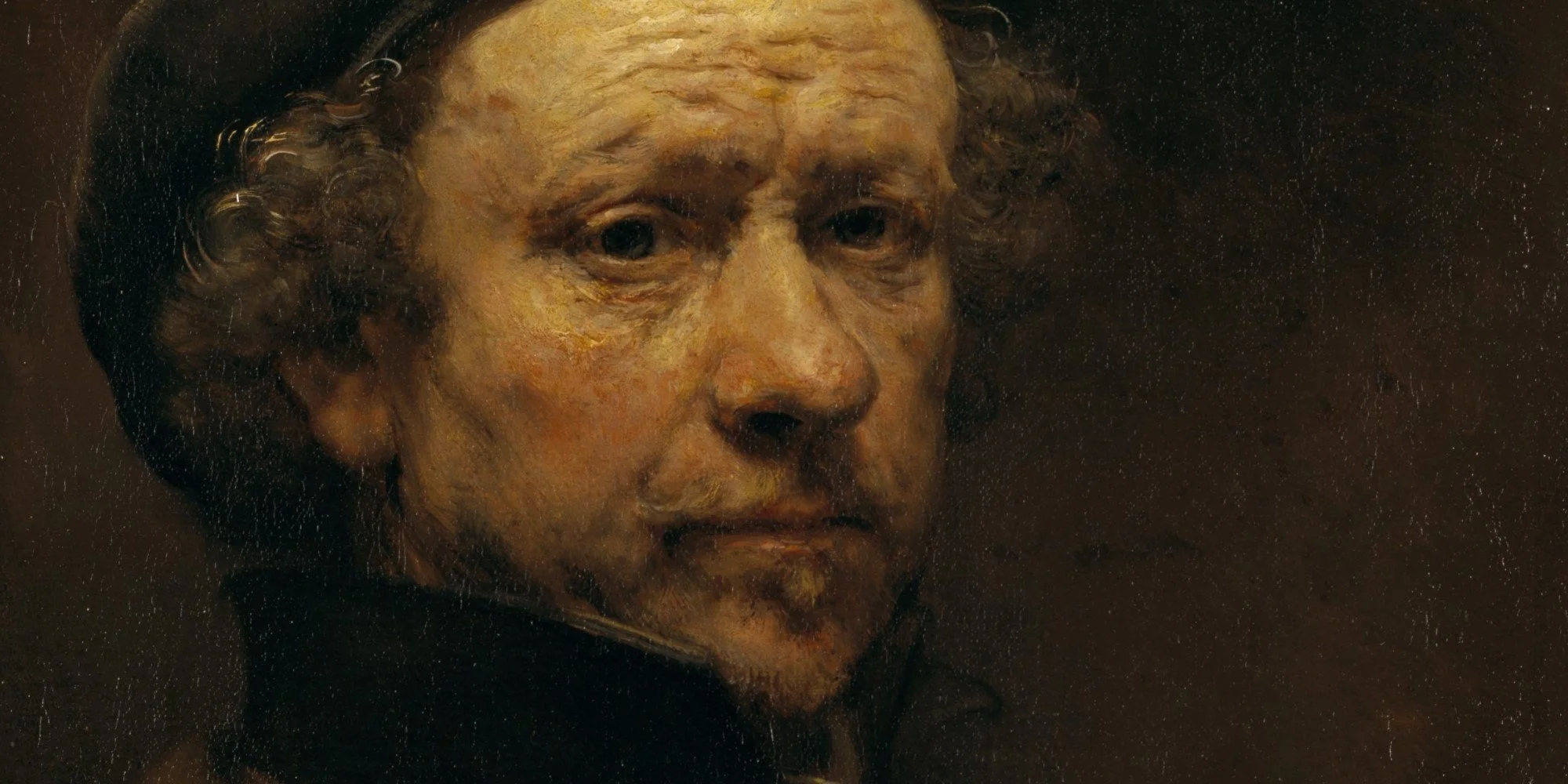
Creativity: A Lantern Swinging Into the Dark
Creativity is intelligence's more bohemian sibling. Where intelligence converges, creativity diverges. Where intelligence seeks the correct answer, creativity generates multiple possible answers — including several no one has tried, and at least one that is genuinely terrible but oddly necessary.
If intelligence is a laser — precise, focused, powerful — then creativity is a disco ball: scattering light in all directions simultaneously, catching on things you'd never thought to illuminate.
J.P. Guilford, in his landmark 1950 APA presidential address, essentially invented the modern scientific study of creativity by distinguishing divergent thinking (generating multiple original ideas) from the convergent thinking measured by IQ tests (Guilford, 1950). Ellis Paul Torrance followed with longitudinal research demonstrating something remarkable: divergent thinking in childhood predicts real-world creative achievement in adulthood better than IQ alone (Torrance, 1981).
Cognitive philosopher Margaret Boden offers the most elegant taxonomy of creative types: combinationalcreativity joins existing ideas in new configurations; exploratory creativity maps the edges of an established conceptual space; and transformational creativity — rarest and most disruptive — shatters the conceptual space entirely and invents a new one (Boden, 2004). Picasso's cubism was transformational. The iPhone was transformational. Most creativity in most boardrooms is combinational — which is perfectly fine, but let's not confuse it with the real thing.
Mihaly Csikszentmihalyi reframed creativity altogether with his Systems Model, arguing it is not a property of individuals but of interactions between a person, a domain of knowledge, and the social field that judges what counts as creative (Csikszentmihalyi, 1996). His work on Flow — the state of optimal engagement where challenge meets skill and self-consciousness dissolves — has influenced everything from game design to education policy.
Intelligence vs. Creativity: The Defining Difference
Here is the most insightful distinction the research supports, and it is worth sitting with:
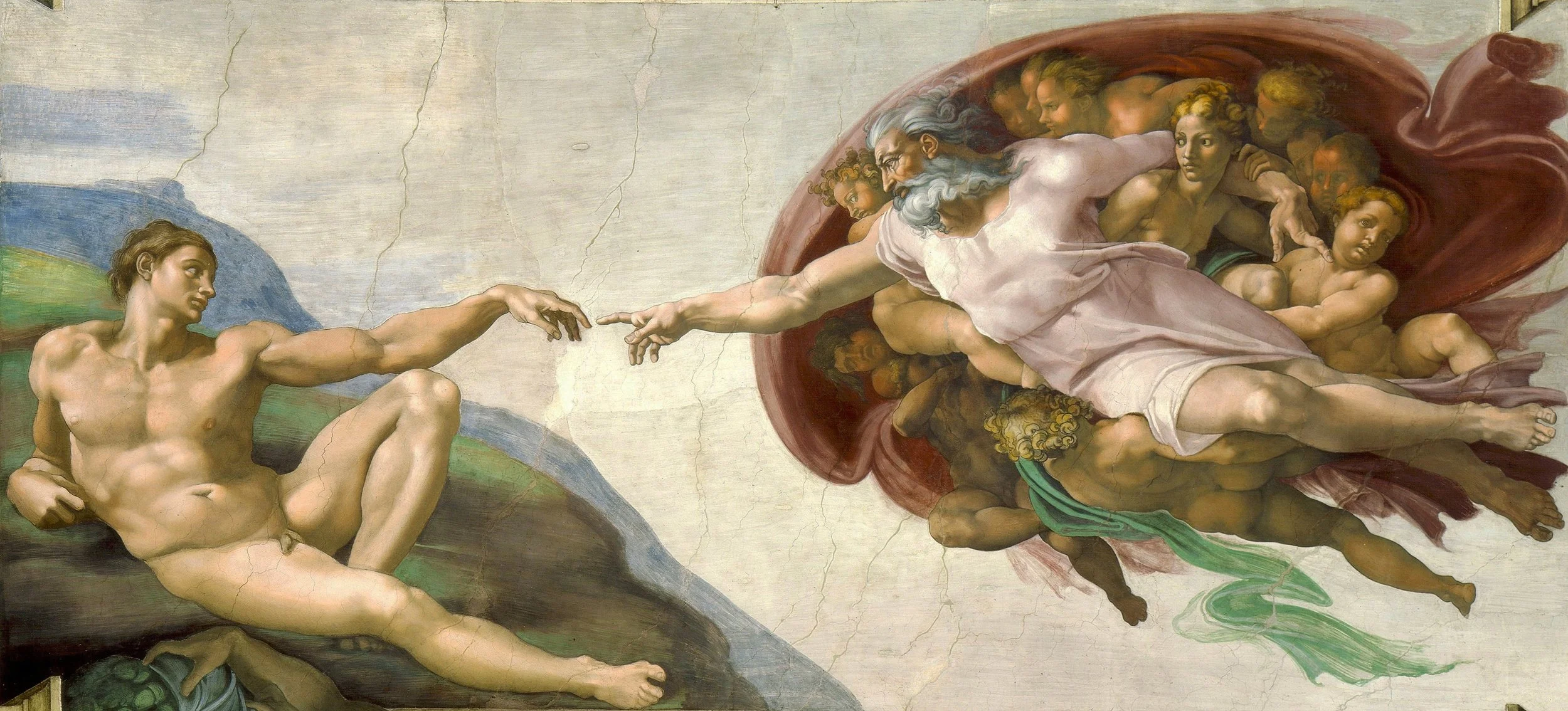
Intelligence models the world as it is, and navigates it brilliantly. Creativity imagines the world as it isn't yet, and builds towards it recklessly. Intelligence answers. Creativity asks questions that didn't exist until someone felt compelled to ask them.
Intelligence, at its philosophical root, is epistemically conservative — it seeks truth, prizes precision, and is most comfortable when answers exist and can be found. Creativity, by contrast, is epistemically adventurous— it tolerates ambiguity, defers judgment, and is most alive in exactly the territory that makes the intelligent mind most uncomfortable: genuine not-knowing.
This maps directly onto John Keats’s concept of negative capability: the capacity to sit “in doubts and mysteries without an irritable reaching after fact and reason” (Keats, 1817). The creative mind isn’t irrational — it simply has a higher tolerance for unresolved tension. Robinson captured this in educational terms: the system rewards students who find the right answer, and systematically discourages those who keep finding new questions.
“I can live with doubt and uncertainty and not knowing. I think it’s much more interesting to live not knowing than to have answers that might be wrong”
Richard Feynman
What the Neuroscience Actually Says.
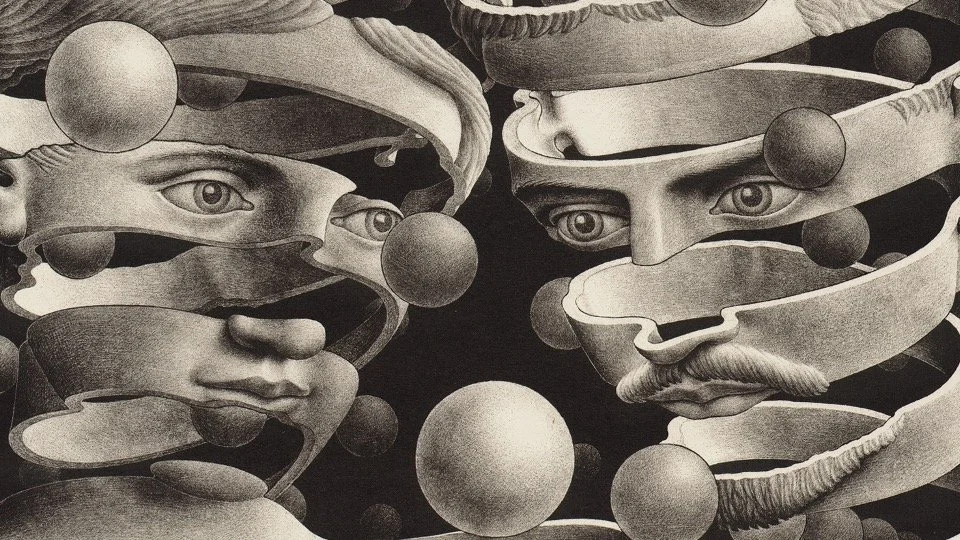
Thanks to neuroimaging, we now have a reasonable — if still incomplete — map of what creative and intelligent brains look like in action. Richard Haier's Neural Efficiency Hypothesis showed that more intelligent brains burn less glucose solving cognitive tasks — they're simply more efficient (Haier et al., 1988). Intelligence is cognitive economy. A very well-run bureaucracy.
Creativity, however, recruits a strikingly different neural architecture. Roger Beaty's 2018 neuroimaging research identified a functional connectivity pattern that predicts creative thinking scores across multiple tasks: a robust coupling between the Default Mode Network — the brain's daydreaming system, active when we're not focused on external tasks — and the Executive Control Network — the brain's director of operations (Beaty et al., 2018). In most people these networks are anti-correlated. In highly creative individuals, they co-activate. The brain simultaneously dreams and directs. Like ski jumpers; a creative mind can leap and also land.
Rex Jung introduced the concept of transient hypofrontality in creative states: a temporary relaxation of prefrontal control that allows unusual associations to surface (Jung et al., 2013). The jazz musician mid-improvisation, the novelist mid-flow — all may be experiencing a loosening of the brain's internal compliance officer. This raises an unsettling possibility: high IQ may actually suppress the Default Mode Network during tasks. The very efficiency that makes the intelligent brain powerful may be precisely what prevents it from making the leaps creativity requires.
The Threshold: How Much Intelligence Does Creativity Need?
Decades of research have converged on the Threshold Hypothesis: a moderate level of intelligence (roughly IQ 120) is necessary but not sufficient for high creative achievement. Below it, cognitive deficits limit creative expression. Above it, additional IQ points contribute diminishing returns; personality, motivation, and openness to experience become far more important (Torrance, 1966).
Scott Barry Kaufman's more recent work has enriched and complicated this picture: mathematical creativity correlates more strongly with fluid intelligence than artistic creativity; verbal creativity sits somewhere between (Kaufman, 2013). Most strikingly, the single personality trait that best predicts creative achievement across all domains is Openness to Experience — intellectual curiosity, aesthetic sensitivity, comfort with complexity. You can have this with an IQ of 105. You can conspicuously lack it with an IQ of 145.
Dean Keith Simonton's historiometric studies add a final, quietly wonderful insight. Studying eminent creators across history, he found that the most creatively productive individuals are not those with the highest rates of success, but those with the highest rates of output. His Equal Odds Rule holds that the ratio of significant to insignificant work remains roughly constant across a creative career (Simonton, 1999). Picasso made approximately 20,000 works. The vast majority are in storage. Mozart's hit rate wasn't higher than lesser composers — he just made more. Creativity optimises for volume and variety. Intelligence optimises for getting it right the first time. Neither approach, taken alone, is sufficient.

A Conclusion of Sorts
Intelligence and creativity are not the same thing. They are not opposites. They are not even reliably allies. The most useful way to think of them is as two fundamentally different orientations to reality — two philosophical stances toward the unknown.
The lamp shows you where you are. The lantern — swinging, uncertain, casting strange shadows — shows you that somewhere else might exist.
My colleague with the Soviet-era design was not unintelligent. He was, in a very precise sense, over-intelligent— so committed to correct solutions that he could not permit himself the productive wrongness that precedes all genuine originality. The best creative minds carry their intelligence lightly, like a good coat — present, useful, available when needed, but never so heavy it prevents them from moving into the uncertain territory where the interesting work actually happens.
Sir Ken Robinson, as ever, had the last word: “The role of a creative leader is not to have all the ideas; it’s to create a culture where everyone can have ideas and feel that they’re valued.” (Robinson, 2011). Which is, when you think about it, rather more useful than being the cleverest person in the room.