
Why Culture Is the Greenhouse (or the Weedkiller) of Human Creativity
On imagination, risk, and the surprisingly negotiable economics of permission

The Room Where It Doesn't Happen
Here is a fact about creativity that nobody has yet managed to fit on a motivational poster: it is extraordinarily sensitive to its surroundings. Put a genuinely creative person in the wrong environment and they will produce roughly as much original thought as a photocopier. A good photocopier, admittedly — reliable, consistent, faintly warm to the touch — but not, it must be said, brimming with ideas.
Put the same person in the right environment, however, and they will astonish you. Quite possibly including themselves.
This sounds like the kind of thing someone says at a conference before selling you a three-day workshop in a hotel with carpet the colour of a migraine. But the evidence for it is remarkably solid — and the implications, for organisations, for nations, and for anyone who has ever quietly concluded that they're just "not a creative person," are both sobering and quietly thrilling.
The central argument of this essay is simple: creativity is not primarily a personal quality. It is a social one. It is grown, or strangled, by the cultural conditions surrounding it. And those conditions — the norms, expectations, and invisible permission structures of a given society — turn out to matter enormously for economic vitality, wellbeing, and the general human capacity to solve the very large problems we seem determined to keep creating for ourselves.
The Myth of the Lone Genius
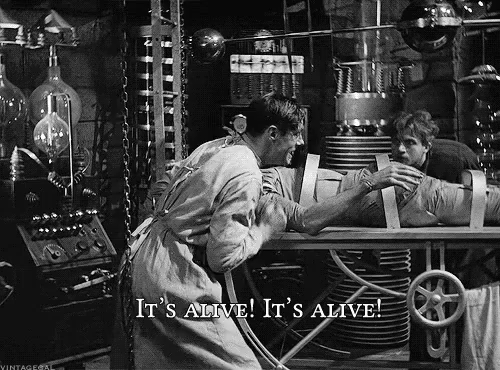
Let's begin with a piece of housekeeping. The popular image of creativity — the solitary visionary, scribbling in a garret, struck by lightning at 3am — is almost entirely fictional. Romantic, certainly. Extremely useful as a film plot. As a description of how ideas actually work, though, it is about as accurate as a treasure map drawn by someone who has never left their house.
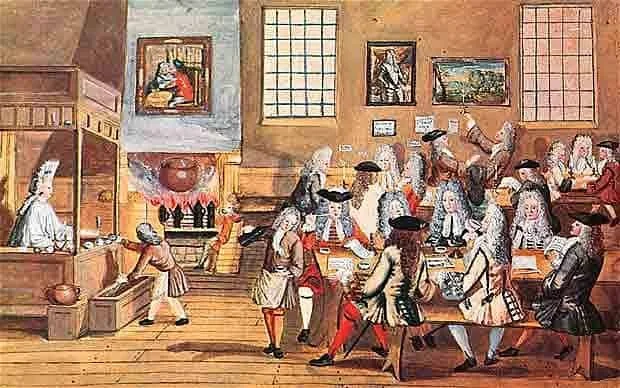
Steven Johnson, in his brilliant 2010 book Where Good Ideas Come From, traced the history of innovation across five centuries and arrived at a rather deflating conclusion for anyone who fancies themselves a lone genius: good ideas don't come from inside individual heads. They emerge from what Johnson calls "liquid networks" — environments where different thoughts, people, and half-formed hunches are free to collide, cross-pollinate, and recombine into something neither party could have reached alone. His favourite example is the 17th-century English coffeehouse, which he credits as one of the great engines of the Enlightenment — not because of the coffee (though, as someone who wrote an entire book fuelled by the stuff, he is sympathetic to its charms), but because it created a space where merchants, scientists, poets, and politicians could all sit at the same table and swap ideas across the usual social boundaries. Without the dress code, the agenda, or the slide deck.
"Chance favours the connected mind." — Steven Johnson, Where Good Ideas Come From (2010)
Johnson's concept of the "adjacent possible" is equally useful here. At any given moment, only certain new ideas are reachable — constrained by the existing toolkit of knowledge, culture, and connection available to the person having them. Expand the toolkit, widen the network, mix in more diverse people and perspectives, and the adjacent possible expands accordingly. Shrink it — through conformity, isolation, or the kind of institutional risk-aversion that makes people's eyes go slightly dead — and the horizon of what seems thinkable contracts in lockstep.
The cultural conditions of a society, in other words, determine the size of the room in which its imagination is allowed to operate. Some rooms are cathedrals. Others are broom cupboards. The difference is rarely talent.
Nobody Is Born Uncreative (They Just Get Convinced They Are)
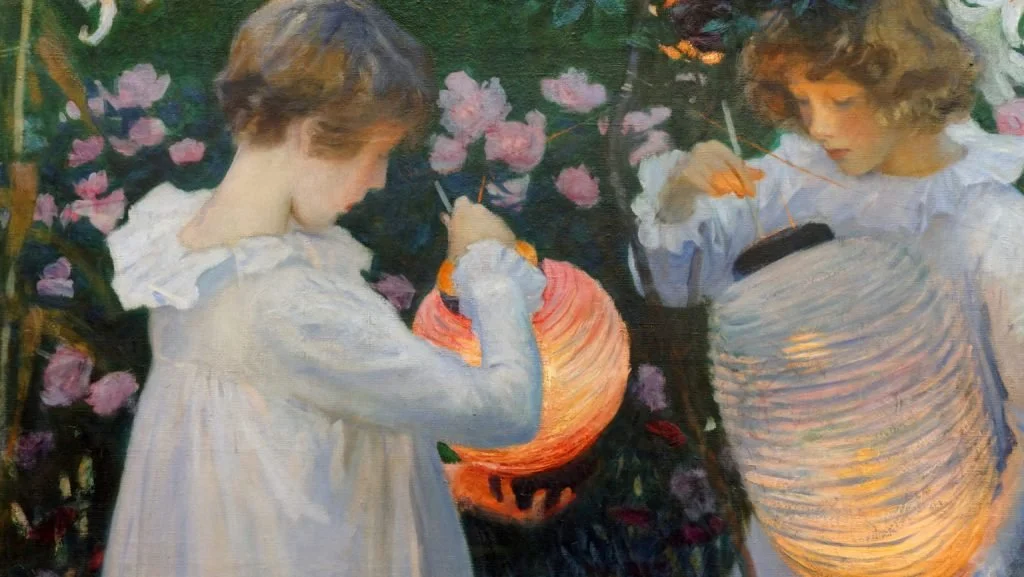
The late Sir Ken Robinson, whose TED talk Do Schools Kill Creativity? became the most watched in TED's history, spent decades making essentially the same point with considerably more panache than most academics can manage. His 2009 book The Element argues, with warmth and considerable wit, that virtually every human being has the potential for deep creative engagement — but that most of them have been educated, managed, or simply embarrassed out of it.
Robinson was fond of pointing out that Paul McCartney and George Harrison sat in the same music class in Liverpool in the 1950s — and that neither was identified as musically talented. Elvis Presley, he noted with evident enjoyment, was told he had no aptitude for music whatsoever. These are not obscure cautionary tales. They are three of the most influential musicians of the twentieth century, all but invisible to the cultural systems specifically designed to find and nurture exactly that kind of talent. The irony is so thick you could stand a spoon in it.
"If you're not prepared to be wrong, you'll never come up with anything original. And by the time they get to be adults, most kids have lost that capacity. They have become frightened of being wrong." — Sir Ken Robinson, Do Schools Kill Creativity?, TED (2006)
What Robinson observed in education systems he also saw replicated in workplaces and societies: a systematic and largely unconscious tendency to reward conformity, punish error, and narrow the definition of intelligence to the point where most human beings conclude — wrongly, empirically wrongly — that they simply aren't the creative type. The damage this does is not merely personal. When you tell a population that only a select few are capable of original thought, you are, in effect, switching off most of the economy's most valuable lights while congratulating yourself on how orderly the darkness is.
This connects neatly to the work of Anders Ericsson, the Swedish psychologist whose decades of research on expert performance culminated in his 2016 book Peak, co-written with Robert Pool. Ericsson's central finding is both counterintuitive and rather liberating: there is no such thing as innate talent in the way we typically imagine it. What looks like natural brilliance is almost always the product of what he called deliberate practice — focused, effortful, feedback-rich training that pushes a person just beyond their current capabilities. Mozart wasn't born being Mozart. He had a father who started him on deliberate practice at age four, meaning that by the time he was a teenager, he'd already done the equivalent of a decade's serious work. The prodigy was, in large part, a training regime.
Ericsson's insight matters here because it shifts the question from "who has creative talent?" to "what conditions allow creative skills to develop?" And that is a question with a social answer. Deliberate practice requires time, encouragement, the freedom to fail repeatedly without catastrophic consequence, and access to feedback from people who know more than you do. Remove those conditions — as many cultures do, through poverty, rigidity, or the stigmatisation of failure — and the talent never emerges. Not because it wasn't there. Because nobody gave it room.
The Coffeehouse Principle
Johnson's coffeehouse metaphor turns out to work remarkably well at the national scale. The cultures and cities that have historically produced the most innovation are those that function as the best liquid networks — places where people from different disciplines, backgrounds, and traditions are free to collide, disagree, share half-baked ideas, and generally behave in the intellectually promiscuous way that new thinking requires.
Richard Florida's research into what he called the "Creative Class" identified a consistent pattern: the regions that attract and retain creative workers, and therefore generate the most economic growth, are those that score high on what he called the "three Ts" — technology, talent, and tolerance. Of these three, tolerance turns out to be the critical enabling variable. Cities and societies that are genuinely open to difference — of background, perspective, lifestyle, and idea — create the kind of liquid network in which slow hunches can develop, collide, and eventually turn into something nobody expected. Places that demand conformity, however efficient they may be at many other things, tend to export their most creative people to somewhere more hospitable. The talent doesn't disappear. It just catches a flight.
The Nordic countries consistently top global creativity and innovation indices partly for this reason. Finland, Sweden, and Denmark have built cultures with strong social safety nets that dramatically reduce the personal cost of professional failure, educational systems that genuinely reward curiosity over compliance, and civic values around open inquiry that have been centuries in the making. The logic, once you see it, is almost childishly simple: when the cost of failure is survivable, more people are willing to attempt things that might fail. When more people attempt things that might fail, more interesting things happen. This is not a complicated insight. It is, however, surprisingly hard to build — and surprisingly easy to dismantle.

Britains Bet on Creative Culture
There is a Churchill quote about the arts that has been doing the rounds on the internet for years, reproduced on posters, recited by actors on television, and shared with the breathless enthusiasm of people who have just discovered something they wish were true. According to this story, when Churchill was asked to cut arts funding to support the war effort, he replied: "Then what are we fighting for?" It is a magnificent line. It is also, unfortunately, completely made up. The Churchill Project at Hillsdale College, having searched his twenty million published words, can find no trace of it. The International Churchill Society is equally blunt. "Not true," says their publications director — which is about as definitive as historical scholarship gets.
What Churchill actually said, at the Royal Academy in 1938, is less cinematic but no less significant:
"The Arts are essential to any complete national life. The State owes it to itself to sustain and encourage them…. Ill fares the race which fails to salute the arts with the reverence and delight which are their due." (Churchill, 1938, Royal Academy Banquet)
And when the Director of the National Gallery suggested evacuating its paintings to Canada at the height of the Blitz, Churchill's response was characteristically uncompromising: "No. Bury them in caves and cellars. None must go. We are going to beat them." (Gilbert, 2011, p.449) Not quite the same as championing arts funding over bullets, but — in its own way — a statement about what a civilisation is actually for.
The more remarkable story, however, belongs not to Churchill but to John Maynard Keynes, and it is a story about what a nation decided to do with itself once the fighting was done. In January 1940, the Council for the Encouragement of Music and the Arts — CEMA — was established to promote and maintain British culture during wartime. After the war, it became the Arts Council of Great Britain, with Keynes as its first chairman, who used his considerable influence to secure meaningful funding despite Britain's devastated finances. (Arts Council of Great Britain, 1946; Leventhal, 1990) Keynes described CEMA's mission as maintaining "the opportunities of artistic performance for the hard-pressed and often exiled civilians" — carrying music, drama and pictures to air-raid shelters, wartime hostels, factories and mining villages — and noted, with quiet satisfaction, that they "soon found that we were providing what had never existed even in peace time." (Keynes, quoted in Wales Arts Review, 2023)
That last clause deserves a moment. A nation, in the ruins of the most destructive war in history, short of money, exhausted to its bones, and facing the rebuilding of entire cities, decided not merely to restore its cultural life to its pre-war state — but to build something better than had existed before. The cultural condition being created was one in which more people, from more places, had access to the things that make a society worth inhabiting. It was, in Johnson's terms, a deliberate attempt to widen the liquid network. And it worked: the revival of the arts in the late 1940s inspired a cascade of new institutions across the country — theatre companies, symphony orchestras, youth ensembles — that seeded the extraordinary British cultural flowering of the decades that followed. (Workers' Liberty, 2014)
The apocryphal Churchill quote endures because it captures something true, even if he never said it. The real history is better: it shows not one man's witty retort, but an entire society making a conscious and costly choice about what kind of conditions it wanted to create — and what kind of people it wanted to become.
Un- educated
Robinson's great contribution was to show that the suppression of creativity is not only a corporate or national phenomenon. It begins earlier. Much earlier.
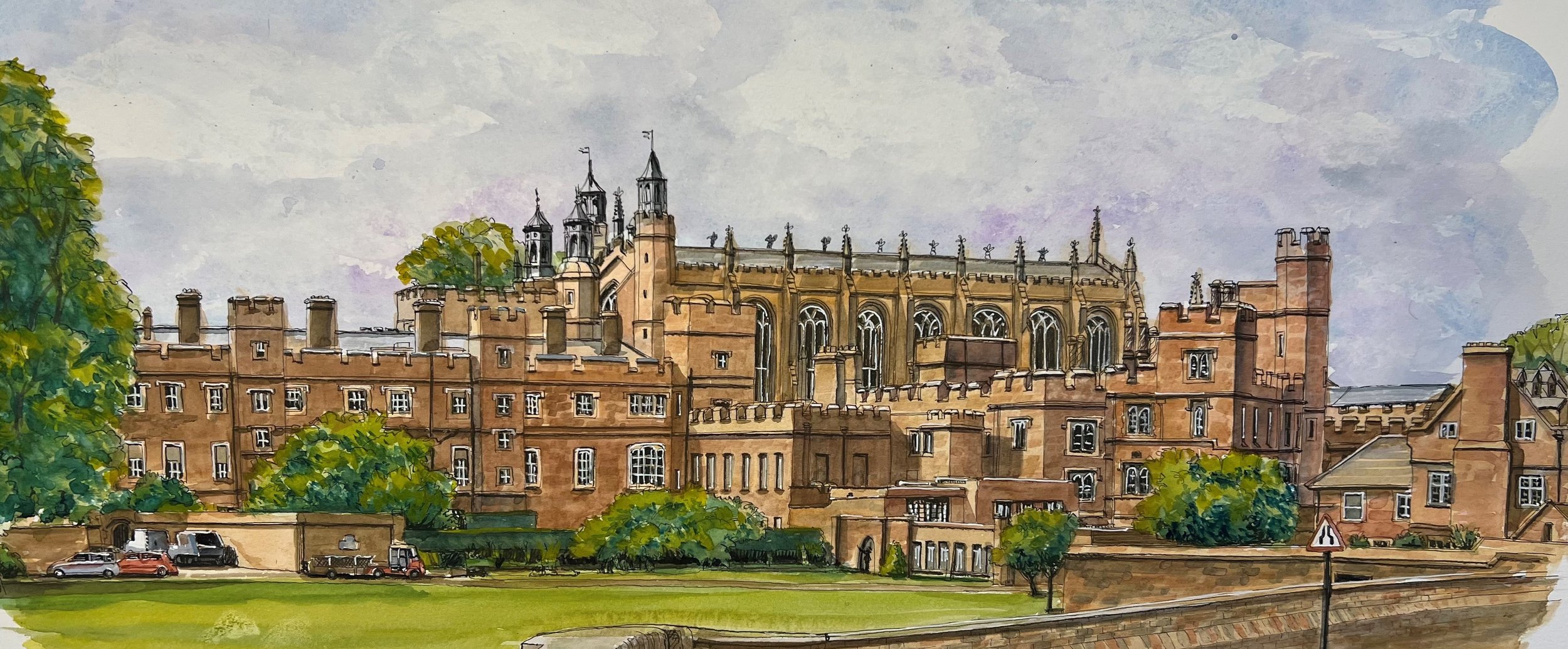
Modern education systems, he argued in The Element and elsewhere, were largely designed in the nineteenth century to produce reliable workers for industrial economies — people who could follow instructions, sit still, and reproduce the correct answer on demand. Useful qualities, all. Not, it turns out, the ones most urgently required for a twenty-first-century economy facing climate change, artificial intelligence, and a catalogue of other challenges that don't come with an answer key. And yet the basic architecture of most school systems still rewards the student who recalls the right information over the one who asks the interesting question. The examination, in its standard form, is essentially a test of memory dressed up as an assessment of intelligence.
The result, as Robinson put it with characteristic bluntness, is that we don't grow into creativity. We grow out of it. Trained to associate originality with risk, divergence with failure, and raising one's hand when uncertain with something to be avoided at all costs. By the time these students arrive in the workforce, many have internalised a settled conviction that creativity is something other people do, in fields helpfully labelled "Art" or "Music" and safely cordoned off from the serious business of the world.
Which would be merely sad if it weren't also, at scale, an economic catastrophe. A 2025 study in Humanities and Social Sciences Communications found that cultural and creative sectors consistently show higher levels of problem-solving, numeracy, and literacy skills than other productive sectors. Creativity isn't a soft extra. It's the engine. We've just been keeping it in a box marked "enrichment."

What You Can Actually Do About It!
All of which raises the obvious question: given that culture is slow, sticky, and resistant to the kind of decisive intervention that makes for a satisfying action plan, what on earth is anyone supposed to do?
More than you might think.
Johnson's advice for individuals is characteristically practical and worth nicking wholesale: go for walks, cultivate hunches, write everything down in pleasingly messy notebooks, take on multiple interests simultaneously, and — above all — frequent the modern equivalent of coffeehouses. The conversations, communities, and environments where different kinds of thinking are free to mix. The slow hunch that becomes a genuine breakthrough almost always needs another slow hunch in another person's head to complete it. Isolation is the enemy of the adjacent possible. The best ideas, like the best sourdough, need something else to react with.
Ericsson's contribution to the practical toolkit is equally important, if somewhat less immediately enjoyable: build the conditions for deliberate practice. This means creating environments — in schools, companies, and families — where people receive honest, specific, timely feedback on their attempts; where effort is praised over outcome; and where getting something wrong is understood as the actual mechanism by which improvement happens, rather than evidence that the person should perhaps have chosen a different field. This is harder than it sounds, especially in institutions that are judged on results. But the research is unambiguous: remove the safety to fail and you remove the conditions for growth. You don't get fewer failures. You get fewer attempts.
At the cultural level, the task is to normalise failure — loudly and persistently. This does not mean celebrating incompetence or pretending that falling short doesn't sting. It means leaders, teachers, and public figures talking openly about their own failures: with specificity, without false bravado, and with genuine reflection on what they learned. When ispace CEO Takeshi Hakamada, following the dramatic crash of Japan's first private lunar lander in 2023, chose to celebrate the mission's data rather than mourn its very public failure, he was not merely managing his company's image. He was performing a small act of cultural revision — modelling what a different relationship with failure might look like in a society that badly needs one. It was a single gesture, but gestures, repeated enough times by enough people, are how cultures change.
Robinson would have approved. His version of the same lesson, delivered in classrooms rather than boardrooms, was simply this: curiosity is the engine of achievement. Light it, and don't let anyone blow it out.

Fuel for the economy
Creativity is not a personality trait distributed unevenly and arbitrarily by the cosmos. It is a capacity that every human being possesses, and that culture either develops or dismantles — usually while barely noticing it is doing either.
The cultures that understand this — that build environments where ideas can move freely and collide productively, that make the cost of failure survivable, that refuse to allow their educational systems to convince children that their kind of intelligence doesn't count — these cultures don't just produce more art and science. They produce more economic energy, more optimism, and more of the adaptive capacity that the current moment seems to be demanding at an increasingly rapid pace.
Steven Johnson's parting advice in Where Good Ideas Come From reads like a manifesto for the kind of culture worth building: cultivate hunches, embrace serendipity, let others build on your ideas, borrow, recycle, reinvent. It is, when you think about it, also a very good description of a functioning society. And of a particularly good coffeehouse.
The air in the room is not fixed. It can be changed. All it takes is someone willing to open a window — and perhaps, while they're at it, put a pot of coffee on.