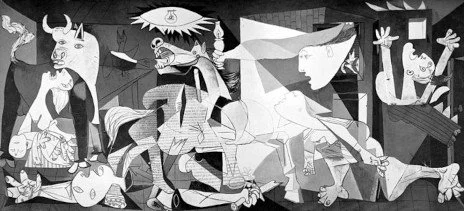
How neuroscience finally proves what your art teacher tried to tell you — and why your boss really should have listened
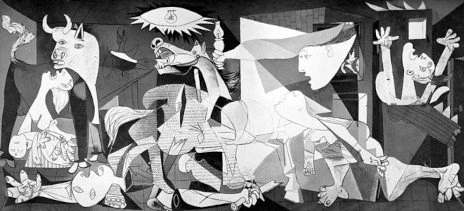
Picasso Was Not Wasting Time. Neither Are You.
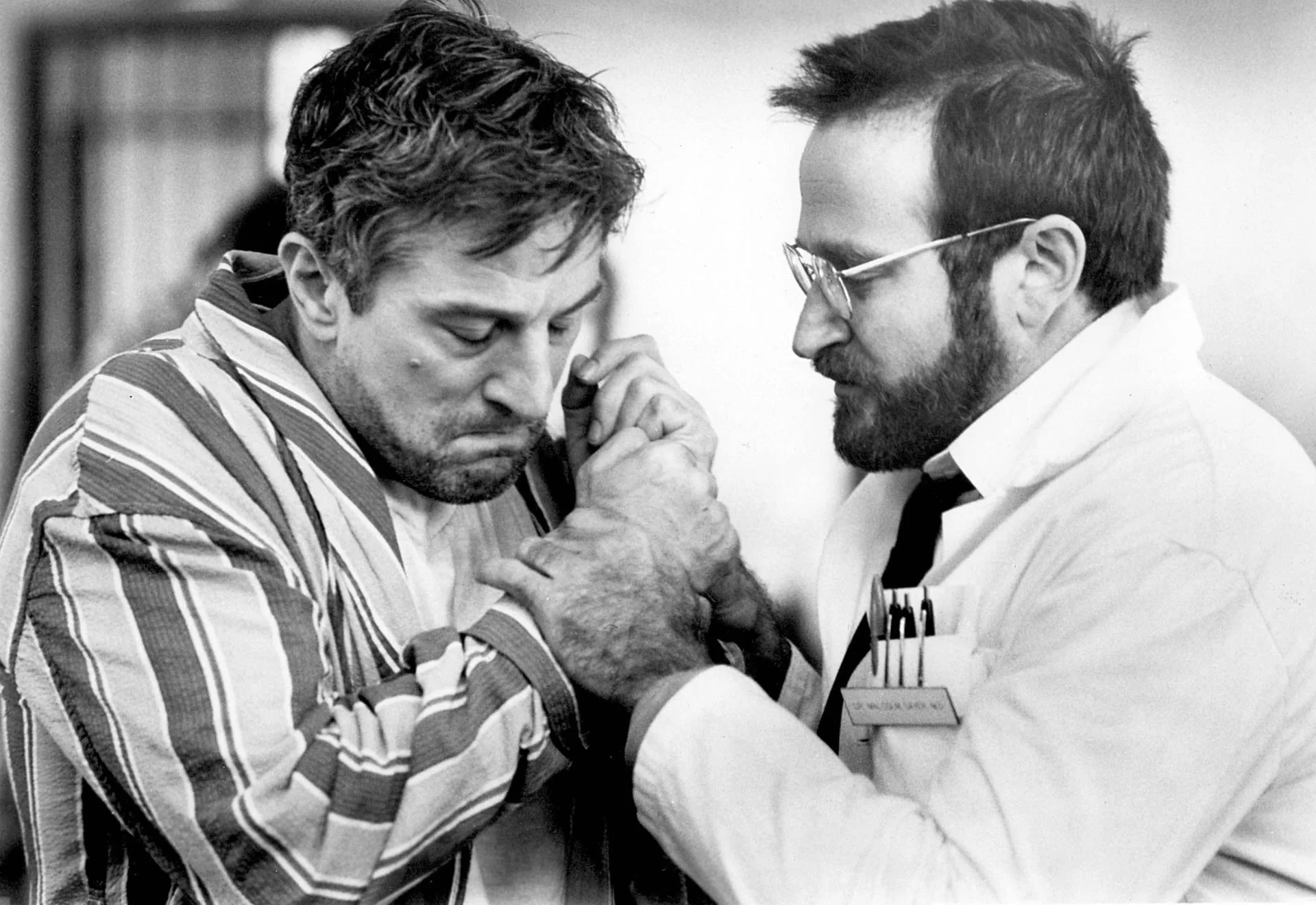
There is a scene early in Awakenings, the 1990 film based on Oliver Sacks's memoir, in which Robin Williams's Dr Malcolm Sayer observes something that stops him cold. His patients — people so profoundly catatonic they cannot respond to a voice, a touch, or a moving object held inches from their faces — will nevertheless reach out and catch a ball lobbed at them, or begin, almost imperceptibly, to sway when music is played in the room. Their brains have not stopped working. They have simply lost access to the voluntary, language-based channels through which most of human life is conducted. But music gets through. Art arrives by a different road entirely, bypassing the locked doors and finding the person still waiting inside. It is a small, quietly devastating observation, and it captures something that neuroscience has been methodically proving ever since: that engaging with art — making it, experiencing it, losing yourself in it — does something profound and measurable to the human brain. Not metaphorically profound. Literally, physiologically, neurologically profound.
This is the central revelation of Your Brain on Art, by Susan Magsamen and Ivy Ross — a book that arrives at the intersection of neuroscience, aesthetics, and public health and discovers, with some justified excitement, that the intersection is the size of a continent. Magsamen founded the International Arts + Mind Lab at Johns Hopkins. Ross leads hardware design at Google. Together they have produced a work that functions as both a scientific manifesto and a rather polite demand that we all immediately stop treating the arts as the nice bit at the end of the school report and start treating them as the biological necessity they actually are.
Your Brain on a Tuesday vs. Your Brain on a Painting
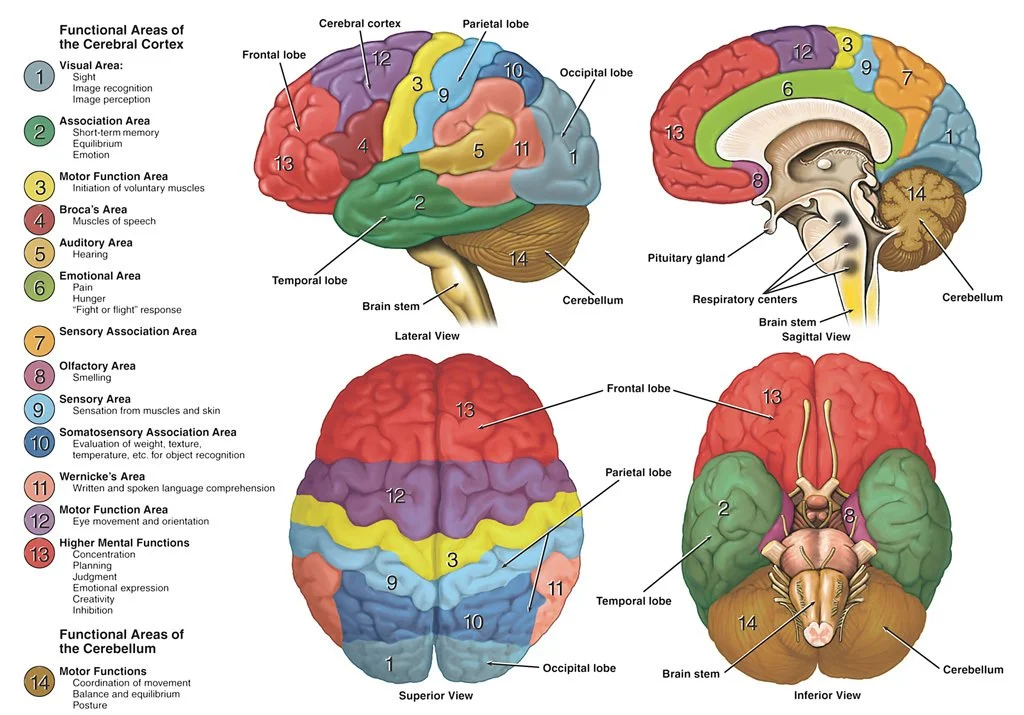
To understand why art matters to neuroscience, it helps to understand what art does to the brain that filling in a spreadsheet does not. When you engage aesthetically — whether you are painting, singing, dancing, writing, or simply standing in front of a great work and letting it wash over you — you are not activating one region of the brain. You are activating a symphony of them, simultaneously. The default mode network, responsible for imagination and introspection. The limbic system, governing emotion. The sensory cortices. The prefrontal cortex, handling executive function. Art forces all of these into conversation with each other in ways that, say, a quarterly review meeting conspicuously fails to do.
This is precisely the neurological state that Mihaly Csikszentmihalyi described in his decades of research into flow — that glorious condition of total absorption in a challenging, skilled activity in which time stops, self-consciousness evaporates, and performance peaks in ways that seem faintly miraculous from the outside. Csikszentmihalyi documented flow in surgeons, chess grandmasters, rock climbers, and painters and found the same signature state in all of them. The creative act, it turns out, is one of the most reliable delivery mechanisms for this state. Which means that every amateur potter at her wheel, every garage guitarist stumbling through a chord change, every child lost in a drawing is unknowingly performing a sophisticated act of neural self-regulation that no app, supplement, or corporate wellness programme has yet managed to replicate. Take that, mindfulness industry.
The Numbers That Should Make Your GP Very Nervous
If the neuroscience sounds a little abstract, the practical evidence assembled by Magsamen and Ross is anything but. Consider the following, delivered not as whimsy but as peer-reviewed fact.
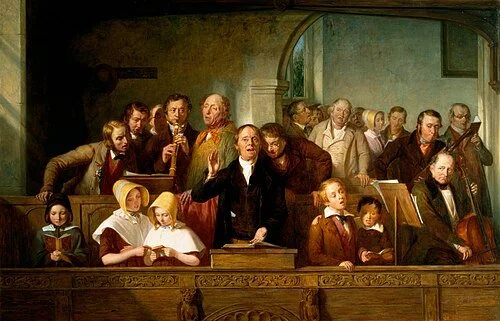
Singing in a choir synchronises the heartbeats of its members — not just their voices, their actual cardiovascular rhythms. Viewing art for as little as ten seconds triggers a dopamine release in the brain, the same reward chemical dispensed by food, sex, and, for some of us, a perfectly timed punchline. Patients recovering from surgery who were given access to art programmes left hospital an average of two days earlier than those who were not — two days that represent not only reduced suffering but substantial savings to healthcare systems, which is the kind of argument that tends to get the attention of people who previously dismissed art as decorative. Most striking of all, a study at University College London found that regular engagement with the arts reduced the risk of dementia by thirty-one percent. Thirty-one percent — a figure that exceeds what most current pharmaceutical interventions can offer, and one that arrives without side effects, unless you count slightly paint-stained fingernails and an alarming tendency to spend weekends in galleries.
This is not fringe science. This is the mainstream beginning to catch up with what artists, philosophers, and the occasionally mocked arts teacher have been insisting for centuries.
Learning to See (Your Brain Has Been Cheating)
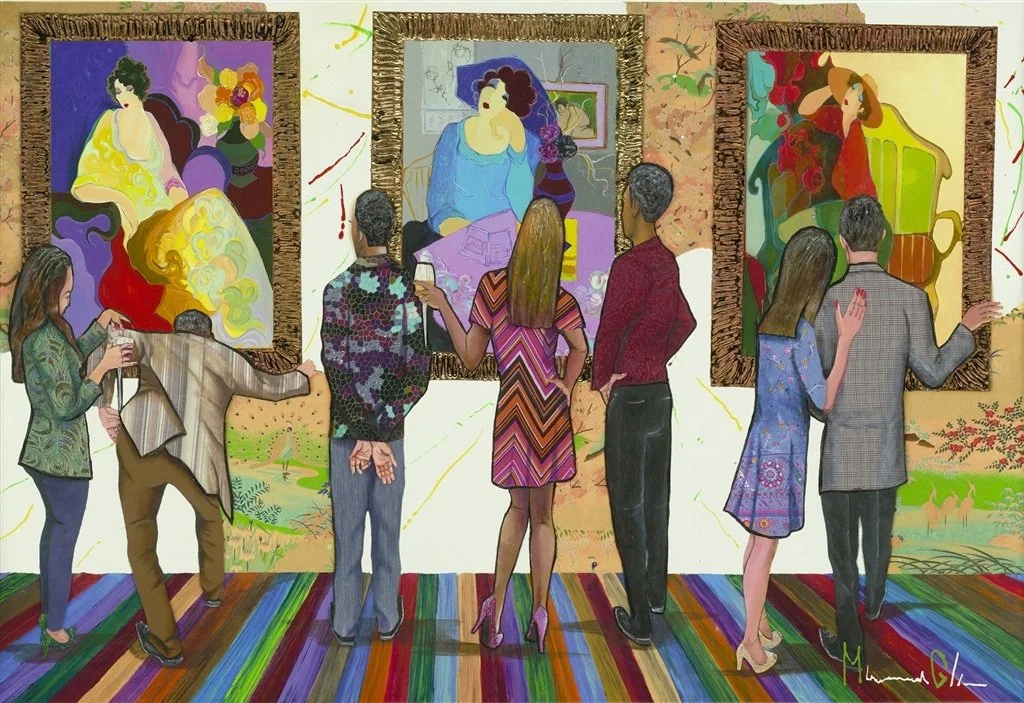
Betty Edwards, whose Drawing on the Right Side of the Brain has been quietly revolutionising art education since 1979, would not be remotely surprised by any of this. Her central argument — that learning to draw is really learning to see, to override the brain's habitual symbolic shorthand and perceive the world as it actually is rather than as you assume it to be — maps almost perfectly onto the neurological mechanisms Magsamen and Ross describe. What Edwards called a shift into right-brain mode, they would call the deliberate activation of non-dominant neural pathways; the shift from the verbal, categorical, label-everything processing that dominates daily life to the spatial, relational, proportion-sensitive processing that drawing demands.
The practical consequence Edwards demonstrated across decades of teaching is both humbling and electrifying: almost anyone, including the most art-convinced-they-cannot-draw adult, can learn to draw reasonably well in a matter of days, because the perceptual capacity is already there, latent, waiting to be switched on. And once it is switched on, it does not politely stay in the sketchbook. It leaks into everything — into how you read a room, solve a problem, understand a face. Edwards called it a cognitive shift. Neuroscientists call it neuroplasticity. Artists call it Tuesday.

Morning Pages and the Rubbish You Need to Take Out
Julia Cameron, whose The Artist's Way has accompanied roughly five million people through the sometimes alarming excavation of their own creativity, arrived at similar conclusions through spiritual instinct rather than laboratory research. Her famous prescription — three pages of longhand, uncensored, stream-of-consciousness writing first thing each morning — was intuited rather than evidence-based when she first proposed it, which makes it all the more satisfying that the evidence subsequently lined up behind it with some enthusiasm. Researcher James Pennebaker demonstrated across multiple studies that expressive writing reduces cortisol, strengthens immune function, and improves mood in ways that persist for weeks after the writing stops. Cameron's morning pages are, in neurobiological terms, a daily act of cognitive clearing and emotional regulation — the mental equivalent of taking the bins out before the kitchen becomes uninhabitable.
The reason most people never start, as Cameron understood and Magsamen and Ross confirm, is fear: the fear of being wrong, ridiculous, or simply not very good. This is the inner critic doing its most destructive work, and it is, as it turns out, costing us in measurable health outcomes as well as in joy. A useful villain has rarely been so well documented.
Where Good Ideas Come From (Hint: Not the Office)
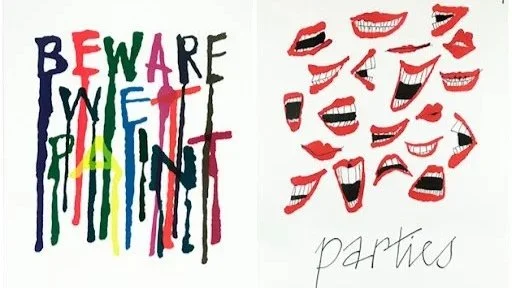
The deeper philosophical question lurking beneath all of this research is why human beings are aesthetic creatures at all. Alan Fletcher, in The Art of Looking Sideways, proposed that creativity is fundamentally an act of connection — the making of meaning from apparently unrelated things — and that this connective capacity is not a personality quirk but a cognitive mode available to anyone willing to practise it. Steven Johnson, in Where Good Ideas Come From, goes further, arguing that the brain's capacity for what he calls the "slow hunch" — the patient incubation of an idea over months or years of promiscuous reading, looking, and making — is an evolutionary adaptation, a biological futures market in which creative engagement today pays cognitive dividends tomorrow.
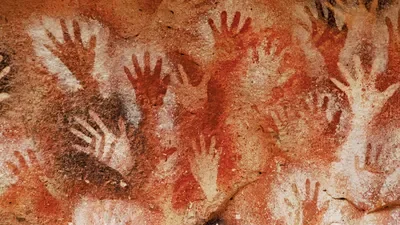
Art, on this account, is not something humans invented after they had sorted out the important things. It is one of the important things. It is older than agriculture, older than the wheel, older than writing. The Blombos Cave in South Africa contains abstract marks made in ochre approximately seventy-three thousand years ago, which means that the urge to make meaningful marks preceded, by a considerable margin, almost everything we would usually call civilisation. We did not develop culture and then, as an afterthought, start drawing. We drew, and the drawing helped us become who we are.
Thinkertoys and the Deliberate Creative
Michael Michalko, in Thinkertoys, approaches the creative mind as a practical engineer rather than a philosopher, offering a toolkit of structured ideation techniques designed to break the brain's deeply annoying default habit of repeating whatever worked last time. What makes his work so resonant alongside Magsamen and Ross is his insistence that creativity is not a gift distributed to a lucky few but a practice — a set of skills that can be cultivated by anyone willing to show up and work at them with some regularity. This is the democratic promise that runs through all the best thinking in this field: Edwards teaching middle-aged accountants to draw, Cameron guiding blocked professionals back to their creative selves, Michalko giving executives permission to think sideways, and Magsamen documenting the measurable health benefits available to absolutely anyone who picks up a brush, joins a choir, or starts dancing in their kitchen at seven in the morning. You do not need to be Picasso. You need only to begin.
The Prescription You Didn't Expect
The picture that emerges from all of this is both alarming and oddly cheerful. Alarming, because we live in a culture that medicates stress, outsources leisure, and passively consumes entertainment at a scale that would have bewildered every previous human generation, while ignoring the one remedy the evidence most consistently endorses. Cheerful, because the remedy is neither expensive nor exclusive. It is available in the kitchen, the garden, the community choir, the evening class, the notebook kept in the desk drawer.
The woman in that hospital corridor, swaying to music when nothing else could reach her, was not being soothed or distracted or managed. Something older and more fundamental than any of that was happening — the brain, stripped of almost everything, still answering the one call it could not refuse. Magsamen and Ross would recognise it immediately. The neuroscience would recognise it. And somewhere in a cave in South Africa, seventy-three thousand years ago, whoever pressed their thumb into ochre and drew the first abstract mark on stone would have recognised it too. So, by now, should we.
"Art is not what you see, but what you make others see." — Edgar Degas