Why Art Education Is the Most Important Subject Nobody Takes Seriously
There is a peculiar ritual performed in schools the world over. A child arrives, aged five, bursting with questions, songs, and a compulsive need to draw horses or cars on everything. Twelve years later, they leave — equipped with quadratic equations, the causes of the First World War, and the nagging suspicion that they are not, and never were, particularly creative. Something was taken from them in there. The question is what, and whether we can get it back.
The answer, it turns out, has been hiding in plain sight — on the walls of a South African cave, inside a neurologist's scanner, and in the collected wisdom of the art educators we have spent decades politely ignoring.
What Art Activities Actually Mean
Art is not colouring in. It is not a reward for finishing your maths. And it is emphatically not, as school timetables often imply the educational equivalent of a free period.
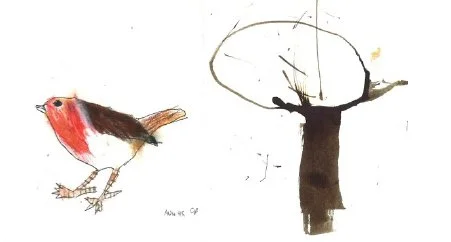
Viktor Lowenfeld and W. Lambert Brittain, whose landmark work Creative and Mental Growth remains one of the most important books ever written about children and learning, were entirely clear on this point. The concern of art education, they argued, is not the product — not the painting on the wall or the clay pot on the shelf — but the process: the act of making or doing, the encounter between the child (or adult) and the material, the decisions taken and the feelings expressed along the way. Art activities, in this frame, are not decorative extras. They are a primary means by which children make sense of their experience.
This is not merely a pedagogical position. It is a neurological fact. Susan Magsamen and Ivy Ross, in Your Brain on Art, show us what happens when creative engagement begins: neural pathways light up, stress hormones drop, emotional circuits fire and rewire. Engaging in an art project for as little as forty-five minutes, their research reveals, reduces the stress hormone cortisol — regardless of artistic ability. The brain, it seems, does not distinguish between the masterpiece and the muddy fingerpainting. It simply responds to making.
What Art Means for Children
A six-year-old does not draw what they see. They draw what they know. This distinction — obvious once pointed out, easy to miss in the rush of the school day — is central to everything Lowenfeld understood about children and art.
In Lowenfeld's schema, creative and mental growth unfolds through stages that are simultaneously social, emotional, perceptual, intellectual, aesthetic, and creative. The scribble is not aimless: it is a child discovering that their body can leave a mark on the world. The symbolic figure — arms sprouting directly from a circular head — is not a failure of observation; it is a feat of conceptual representation. Each stage reflects the whole child, developing the whole child.
Creative and Mental Growth reminds us, with some urgency, that emotional or mental disturbance results when children are thwarted — either by loss of self-confidence or by the imposition of adult concepts of so-called good art. The red pen applied to a child's painting is not a correction. It is a small act of creative violence.
For Magsamen and Ross, this matters at the level of the brain itself. Engaging in creative activities from an early age, they argue, builds better problem-solving skills, sharpens emotional intelligence, and improves overall cognitive development. Children who have art experiences in the early years are, research consistently shows, more confident, more self-organised, and more emotionally resilient than those who are not. Art does not just decorate childhood. It constructs it.
The Gateway to Learning - The Senses
Here is something the curriculum designers have largely missed (in my opinion): we are embodied creatures. We do not learn by sitting very still and listening. We learn through touch, sound, movement, smell, and sight — through the full bandwidth of sensory experience that evolution spent millions of years perfecting.
Lowenfeld knew this. He had, after all, studied under an educator who required his students to sculpt blindfolded — discovering, through touch alone, what the eyes habitually overlook. Sensory engagement was not supplementary to learning; it was learning.
Magsamen and Ross take this insight and give it a neuroscientific spine. As human beings, they observe, we are constantly processing our surroundings through our senses — the aesthetics of our environment being taken in and processed on a moment-by-moment basis. Interactive art experiences, they show, dissolve the boundaries between art and viewer, engaging all our senses and strengthening memory. The vibrations of sound waves affect stress. Touch communicates emotion across neural pathways. The aesthetic environment — what we see, hear, feel, and inhabit — is not the backdrop to experience. It is experience.
An education that silences the senses in pursuit of the purely cognitive is, to put it plainly, an education that works against the grain of the human brain. As Ken Robinson said “the body is not just transport for the head”
Self-Expression and Self-Identification.
Art is, among other things, how we find out who we are.
Lowenfeld was particularly attentive to what he called self-identification: the capacity of the child to recognise themselves in their work, to bring their own experience to the making, to express feelings for which words — at five, at eight, at twelve — have not yet been invented. Art was, in his words, the friend children turn to with their joys and sorrows, their fears and frustrations, whenever words become inadequate.
This is not sentimentality. Research on arts education and socioemotional development consistently identifies identity formation, self-regulation, and emotional articulation as core outcomes of arts engagement. Children who have access to art, music, drama, and movement develop stronger metacognitive skills — the ability to think about their own thinking — and are better equipped to navigate complex emotional terrain.
Magsamen and Ross add a layer of quietly astonishing science: human touch can literally transmit emotional intention — sadness, care, excitement — through sense receptors, brain to brain. We can, they write, quite literally "speak" to one another through touch, through colour, through sound. Art is not a language we invented. It is a language we evolved.
What Art Means for Society
The case for art education is sometimes made in purely individual terms — better well-being, higher confidence, improved academic performance. All of which is true. But Lowenfeld and Brittain saw further than this.
"Children are the essence of this book," they wrote, "but more than that, they are the essence of society." Creative and intellectual growth, in their view, are not merely personal achievements. They are the foundations of any educational system worthy of the name — and, beyond that, of any society capable of facing the future.
The arts are how cultures understand themselves. They are where values are debated, grief is processed, and possibility is imagined. A society that does not teach its children to make things — to draw, paint, sculpt, sing, dance, and write — is a society slowly losing its capacity for self-understanding. And in an age of artificial intelligence, political polarisation, and ecological anxiety, that capacity seems rather more urgent than the ability to pass a standardised test.
Art education also builds what the research literature calls social competence and collaborative ability — the skills of listening, of perspective-taking, of working with rather than against. These are not soft skills. They are the skills on which civilisations depend.
The Importance of Creativity — and Why We Keep Forgetting It
Sir Ken Robinson, who spent his career being exactly right about education and largely ignored for it, had a line that should be carved into every school building: "We don't grow into creativity, we grow out of it. Or rather, we get educated out of it."
His 2006 TED talk — the most-watched of all time, a fact that perhaps tells its own melancholy story — argued that creativity is now as important as literacy, and ought to be given the same status. Schools, he observed, have been designed to produce good workers, not creative thinkers. The result is that many highly talented, brilliant people go through twelve years of education and emerge convinced they are not creative — because the thing they were good at was never valued or was actively stigmatised.
Our education systems, Robinson suggested, have mined human minds the way we strip-mine the earth: for a particular commodity. And for the future, it will not serve us.
Magsamen and Ross would agree. Their case for the arts rests not on nostalgia but on evidence — clinical trials, brain scans, longitudinal studies — showing that creative engagement is not a luxury but a biological necessity. We are, they argue, on the verge of a cultural shift in which the arts can deliver potent, accessible, and proven solutions for well-being. The question is whether our schools will catch up before the next generation grows out of something they were born with.
The Purpose of Education — A Modest Proposal
So, what is education for?
Robinson's answer was characteristically direct. Our task is to educate the whole being — so that children can face a future we cannot predict, with capacities we cannot fully enumerate in advance. Education is not preparation for exams. It is preparation for life. And life, as anyone who has lived it will confirm, is substantially an aesthetic experience: full of beauty, difficulty, ambiguity, loss, joy, and the constant need to make something out of whatever materials you happen to have to hand.
Lowenfeld and Brittain, writing decades earlier, said much the same: creative and intellectual growth are the basis of any educational system. The hope embedded in every child's drawing — the hope that they might be seen, understood, and encouraged to go further — is also the hope embedded in the very idea of education itself.
The cave painters of Blombos, some 75,000 years ago, did not make their ochre marks because they had finished their other subjects. They made them because making is what humans do. It is how we think, how we feel, how we speak to each other across the silence.
The question our schools must answer is not whether children should be creative. They already are. The question is whether we will have the wisdom — and the courage — to stop educating it out of them.
References: Viktor Lowenfeld & W. Lambert Brittain, Creative and Mental Growth (1947/1987); Susan Magsamen & Ivy Ross, Your Brain on Art (2023); Sir Ken Robinson, "Do Schools Kill Creativity?", TED Talk (2006); Frontiers in Psychology, "Delineating the Benefits of Arts Education for Children's Socioemotional Development" (2021).