
In 1983, the J. Paul Getty Museum bought a kouros — a seven-foot marble Greek youth, rigid as a lamppost, archaic-smiling in the way that suggests he's just remembered something faintly embarrassing. Before any money moved, the museum did everything logic could possibly ask of it. Geologists confirmed the dolomite surface had the kind of patina that takes centuries, not decades, to grow, which is not something you can fake with a tin of Ikea wood stain and a weekend. Lawyers traced a provenance back through a Swiss collection to the 1930s. A committee of scientists and curators spent fourteen months on the case — fourteen months! — cross-examining the statue with more diligence than most countries apply to selecting a head of state. Every test came back clean. Then the director walked a visiting art historian into the gallery, and before the man had read a single document, before he'd so much as adjusted his glasses, he looked at the statue and said "fresh" — the way you might describe bread that shouldn't still be warm. Another expert felt a wave of dislike he couldn't justify. A third looked at the fingernails and simply thought: no. Thirty years and considerable institutional embarrassment later, the consensus has swung hard toward forgery. The statue had passed every test logic knew how to set, and failed the one nobody could write down, administered by people who couldn't explain it even as they were administering it.
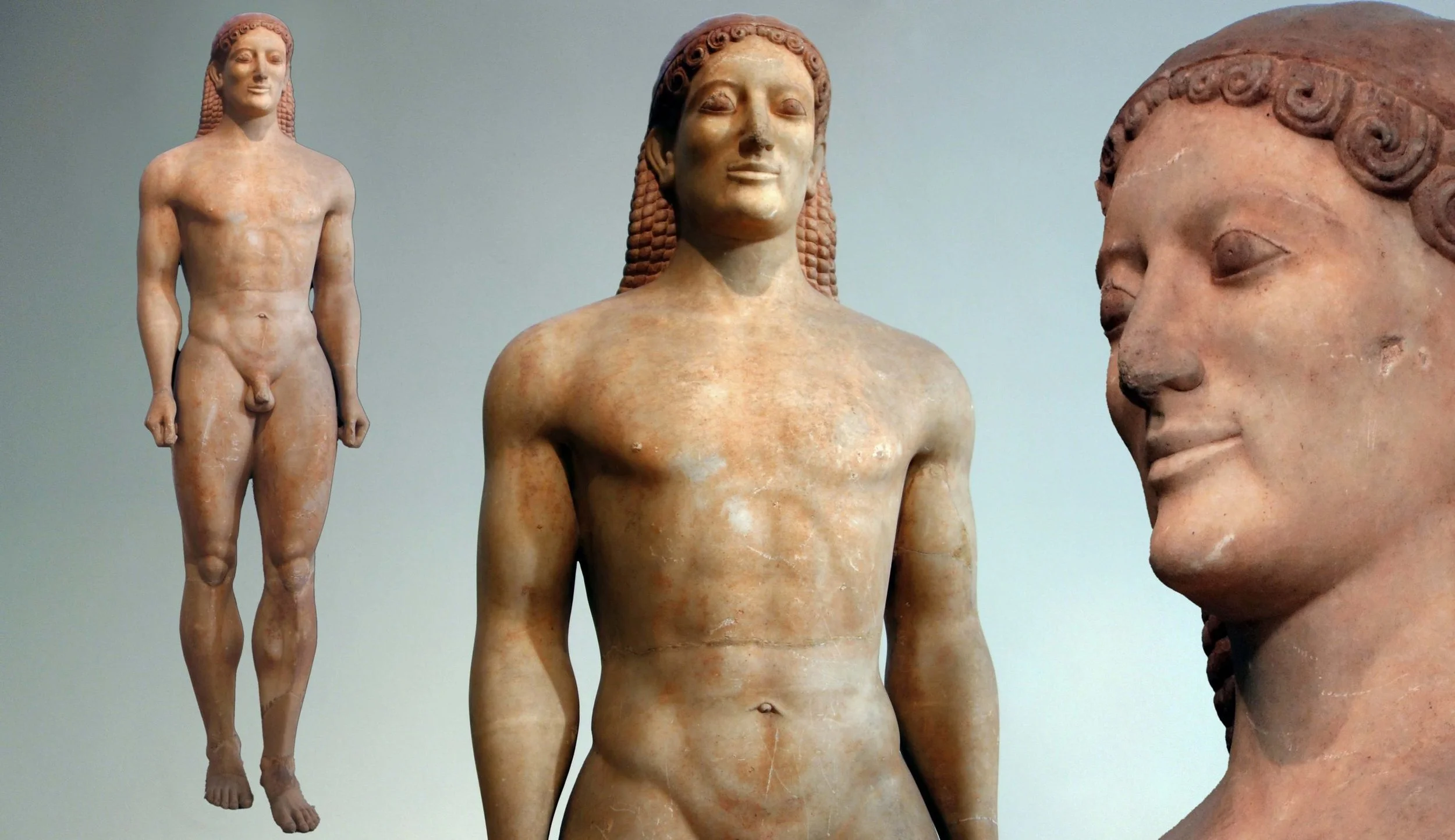
That story, which opens Malcolm Gladwell's Blink, is where I want to start, because it captures something a fourteen-month due-diligence process is structurally incapable of noticing about itself: it can be flawless and still be answering the wrong question. Logic didn't fail the Getty. It succeeded completely, at a task that turned out not to be the task.
Rory Sutherland has a word for the mode of thinking that mistakes "process I can defend" for "process that works": pseudo-rationality. In Alchemy, his very funny, very serious argument against corporate reasonableness, Sutherland isn't attacking logic itself — he's attacking the habit of only ever trusting the kind of logic you could later stand up and justify in a meeting without anyone's eyebrows moving. Pseudo-rationality doesn't ask "is this a good idea?" It asks "if this goes wrong, can I prove I wasn't the idiot?" — a subtly different question that, over enough meetings, quietly redesigns the entire building. The approved process is superb at vetoing catastrophic ideas. It is, unfortunately, equally superb at vetoing brilliant ones, because on the page a brilliant unprecedented idea and a terrible unprecedented idea look identical: unmeasurable, unbacked by case study, and no fun at all to defend to Legal.
Sutherland's favourite example involves a train, and it is the funniest piece of infrastructure economics I know. Eurostar spent roughly £6 billion re-engineering track to shave about forty minutes off the London–Paris run. Impeccably logical: faster train, shorter journey, done. But as Sutherland notes, you could have manufactured a perceivedimprovement at least as large, for a fraction of the cost, by putting Wi-Fi on the trains and having supermodels serve free champagne down the aisle — at which point passengers would be actively lobbying the driver to slow down. Nobody proposed the champagne plan. Not because it's a worse idea, but because no engineer has ever put "morale-boosting supermodels" in a business case and kept their job. Logic wasn't beaten by a better argument here; it simply never let the better argument into the room, because the room only accepted arguments with footnotes.

So far this sounds like a complaint about corporate cowardice, which is true but not the interesting part. The interesting part is that your own brain runs on exactly the same rigged system — it just has better excuses.
Antonio Damasio's most famous patient, a man he calls Elliot, had a brain tumour removed along with a slice of his ventromedial prefrontal cortex. His IQ stayed excellent. His memory, logic and general knowledge tested beautifully — better, on paper, than most of the people now reading this sentence. What vanished was his emotional response, and with it, disastrously, his ability to decide anything at all. Offered a choice between two appointment times, Elliot could produce a flawless pro-and-con list for each and then simply stand there, logically paralysed, for the length of an afternoon, because nothing in him ever went "click." He went on to lose his job, his marriage, and his savings — not from any failure of reasoning, but from the total absence of the small emotional nudge the rest of us don't even notice doing the actual work of deciding. Damasio calls this the somatic marker hypothesis, which is an unnecessarily solemn name for a very simple discovery: feeling isn't logic's noisy neighbour. It's the bit that actually picks a chair when logic has finished, quite correctly, describing every chair in the room.
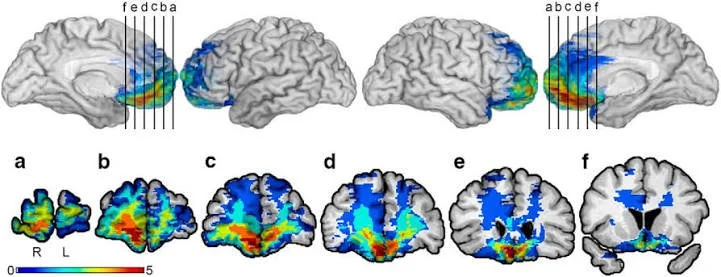
This is also, unexpectedly, where Steven Pinker — reason's most patient and least embarrassed defender — ends up agreeing with everybody he'd normally be arguing against. Pinker draws a careful line between formal logic, the kind used to prove a theorem, and what he calls ecological rationality: the looser, faster, feeling-assisted reasoning that actually gets a person through a Tuesday. In his account, emotions aren't bugs in an otherwise clean system. They're themselves a form of computation — evolution's way of letting a creature act well under time pressure, before the formal decision tree has finished growing its fourth branch and the sabre-tooth has finished its lunch. Even Pinker, who has built a career defending reason from its critics, concedes that a mind running on pure syllogism, with the feelings switched off, isn't more rational. It's just slower, and worse, and — per Elliot — occasionally unemployed.
Gladwell supplies the punchline version of the same finding, repeatedly. Cardiologists diagnosing chest pain in the emergency room were, for years, handed increasingly elaborate checklists — more variables, more boxes, more visible thoroughness — and got measurably worse at spotting real heart attacks, because the extra "rigour" simply drowned out the signal an experienced doctor's gut was already tracking. It was only when researchers such as Lee Goldman stripped the checklist back down to a handful of the most predictive factors — closer, not coincidentally, to how the good doctors were already deciding — that outcomes improved. Which gives us, at last, the actual shape of the argument, rather than just a pleasing pile of anecdotes: more process is not the same thing as more accuracy, and past a certain point the two trade against each other directly. The checklist didn't fail because checklists are bad. It failed because it optimised for something else entirely — for the appearance of diligence, for the ability to say afterwards that every box was ticked — and appearance of diligence and actual accuracy are not the same currency, however often they get spent as if they were.
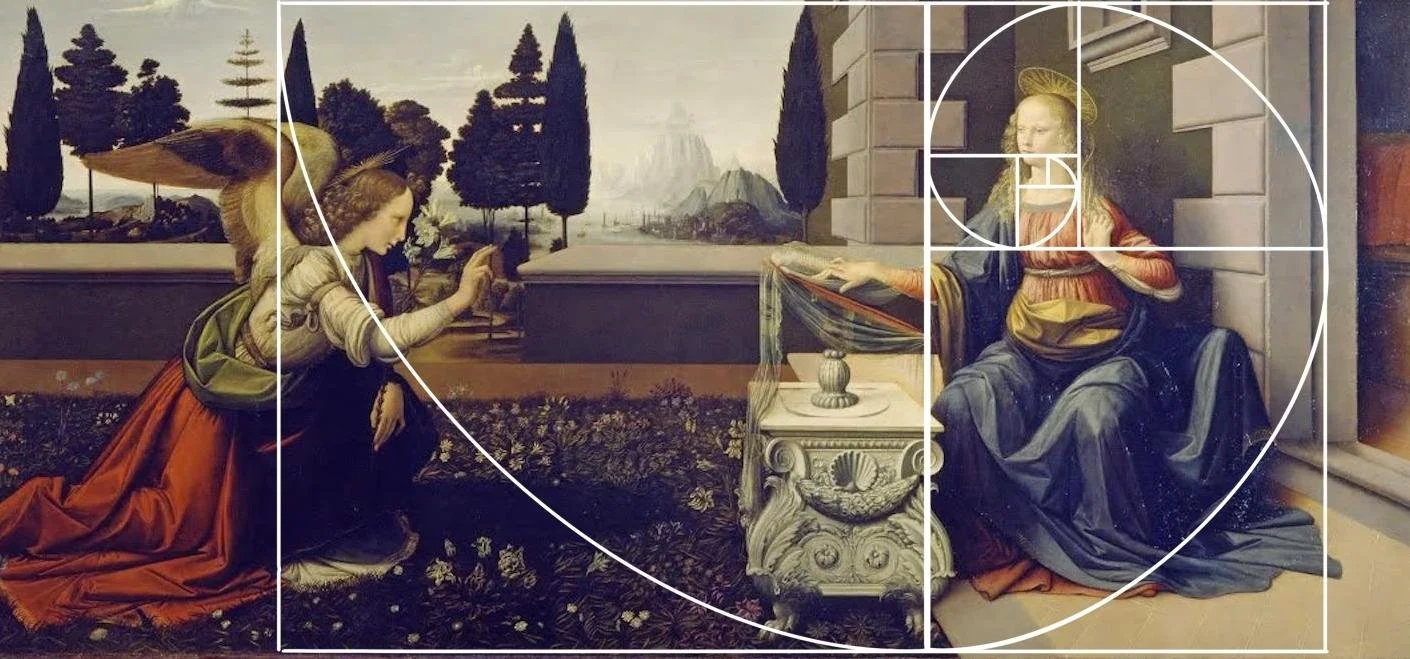
That, I think, is the real distinction hiding underneath all of this, and it's sharper than "logic bad, gut good," which would be a stupid thing for anyone to argue and an especially stupid thing for a blog to argue in defence of intuition. The distinction is between reasoning aimed at truth and reasoning aimed at defensibility, and the trouble is that they feel identical from the inside — both produce a document, a process, a sense of having done things properly — while quietly optimising for opposite outcomes. Truth-seeking reasoning is willing to arrive somewhere embarrassing, unprecedented, or hard to explain at the next board meeting. Defensibility-seeking reasoning — Sutherland's pseudo-rationality — will always, when the two diverge, choose the answer that photographs well in an audit rather than the one that's actually correct, because its real client was never the problem. It was the person who might one day ask "whose idea was this?" The Getty's fourteen months were aimed, whether anyone admitted it or not, less at discovering the truth about the statue than at building a file that would survive a lawsuit. It succeeded magnificently at that job. It's just a different job from the one everyone thought was being done.
None of which means throw out logic, run entirely on vibes, and hire the supermodels without checking the budget. Logic remains the single best tool humanity has for closed, stable, rule-bound problems, which is most of engineering and a comforting slice of everyday life. The failure mode isn't logic. It's smuggling logic's home turf — replicable, measurable, rule-governed — into territory that doesn't have stable rules, and then mistaking the resulting paperwork for proof, simply because paperwork is what rigour usually looks like when it's actually present. The question worth asking of any confident, thoroughly-documented decision, then, isn't "was this logical?" It's "logical about what, exactly — the problem, or the meeting where we'll have to explain ourselves?" Because the kouros is still standing in that gallery in Los Angeles, labelled, with what I like to think is a curator's private smile, "560 B.C., or modern forgery" — a fourteen-month masterpiece of process, quietly outvoted by a man who took one look and, without a single footnote to his name, was right.

Books
Sutherland, Rory. Alchemy: The Surprising Power of Ideas That Don't Make Sense. WH Allen, 2019. — Source of "pseudo-rationality" and the Eurostar/champagne example.
Damasio, Antonio. Descartes' Error: Emotion, Reason, and the Human Brain. Putnam, 1994. — Source of the Elliot case study and the somatic marker hypothesis.
Gladwell, Malcolm. Blink: The Power of Thinking Without Thinking. Little, Brown, 2005. — Source of the Getty kouros case study and the cardiology/ER diagnosis research.
Pinker, Steven. Rationality: What It Is, Why It Seems Scarce, Why It Matters. Viking, 2021. — Source of the formal logic vs. ecological rationality distinction.