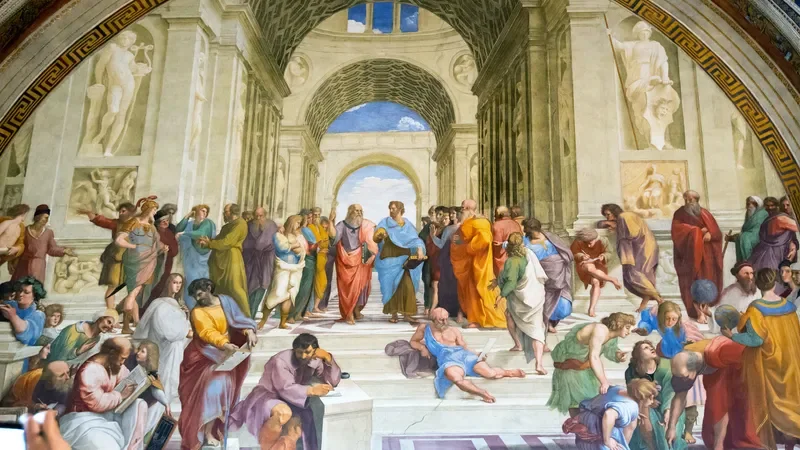
Part One - Divine Coinage: How a Sack of Silver Became a Gift from the Gods.
Somewhere in first-century Judaea, a wealthy man prepares for a long journey. Before he leaves, he summons three servants and divides his fortune among them: five talents to the first, two to the second, one to the third — "to every man according to his several ability," as the King James Version puts it. Then he departs, apparently without leaving a forwarding address.
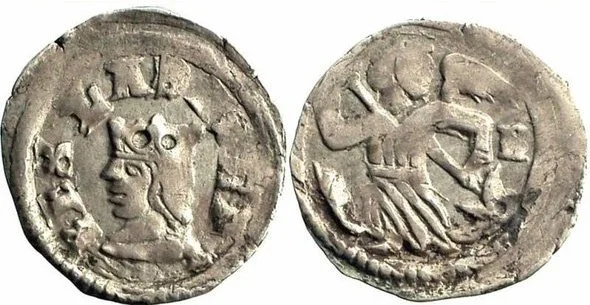
The first two servants go into business and double their money. The third, a cautious soul with an unfortunate understanding of risk, digs a hole and buries his share. When the master returns, the entrepreneurs are praised and promoted. The man with the spade is denounced as wicked and slothful, stripped of his single talent and cast into outer darkness, where there is weeping and gnashing of teeth. It is, by any standard, a harsh performance review.
The parable has been preached for two thousand years, and warns against playing it safe, hoarding your “gifts”, or neglecting your “potential” out of fear or complacency, but its most remarkable achievement is linguistic. In the ancient Mediterranean a talent was a weight — roughly as much silver as a strong man could carry — and, by extension, a staggering sum, worth perhaps fifteen or twenty years of a labourer's wages. Medieval readers, pondering the moral, came to treat the coins as a metaphor for God-given abilities, and by the late Middle Ages "talent" in English meant a natural gift. It remains the only unit of currency I know that has retired to become a personality trait. Imagine telling a young pianist she has a remarkable quantity of drachma.
So what do we mean by it now? The dictionary offers "natural aptitude or skill," which sounds tidy until you notice how much work the word natural is doing. In practice we use talent in at least five overlapping senses:
1. Natural aptitude — the head start: the toddler who sings in tune.
2. Learning potential — the speed of uptake: the student who grasps in a week what takes others a term.
3. Developed ability — skill accumulated: the joiner whose dovetails close like a handshake.
4. Exceptional performance — the visible summit: the Wimbledon final, the Nobel lecture.
5. A distinctive combination of strengths — the rare alloy: the surgeon who draws, the physicist with a novelist's ear.
Notice the drift in that list. The first two lie hidden inside a person; the last three can only be seen in what a person does. Much of the history of talent is a quarrel over which end of the list is the real thing — and, as we shall see, the answer has tended to depend on whether we are talking about ourselves or about somebody else.
The earliest evidence of talent we possess comes with no name attached. Some 75,000 years ago, on the southern coast of Africa, someone in Blombos Cave scratched a careful cross-hatched pattern into a piece of red ochre. We have no idea whether the engraver was thought gifted, diligent or merely bored on a wet afternoon. Nobody wrote a biography. The line simply exists, which is perhaps the purest form talent ever takes.
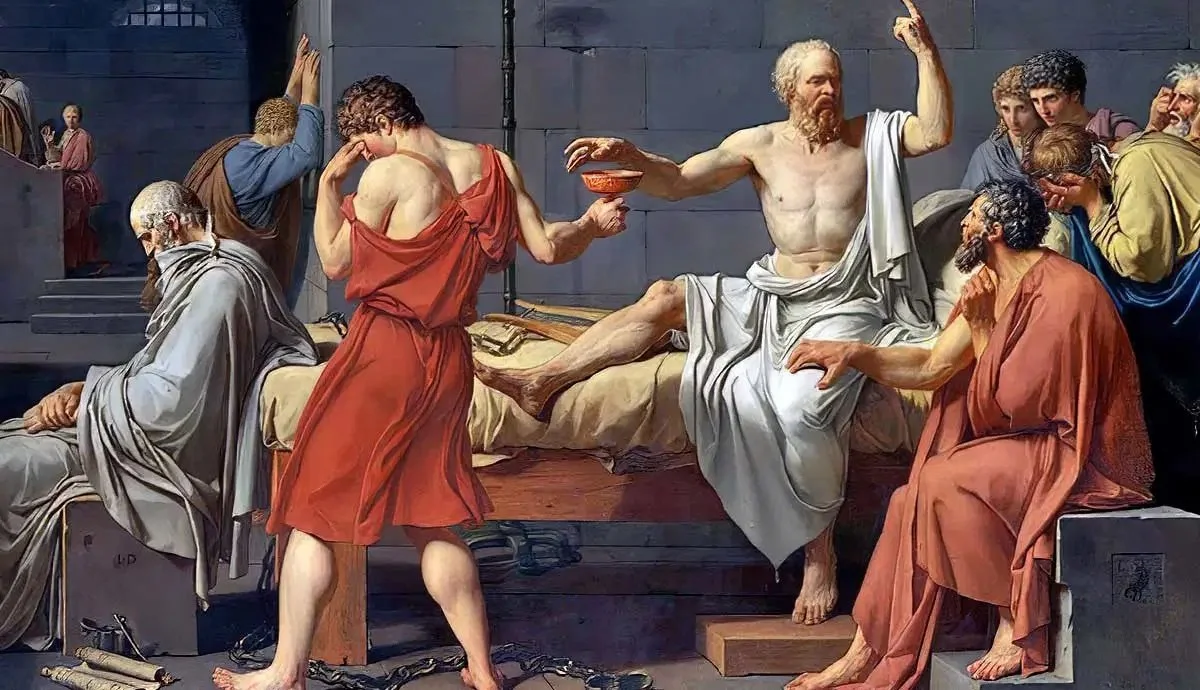
The death of Socrates - Jaques Louis David
By the time anybody did start writing, the Greeks had decided that brilliance arrived from outside. Excellence — aretē — was admired, but inspiration was a visitor. Homer opens the Iliad not by announcing his own genius but by asking the Muse to sing through him. In Plato's Ion, Socrates gently teases a celebrated reciter of Homer by suggesting that poets compose not by skill but by divine possession, like Bacchic revellers — a polite way of saying they haven't the faintest idea what they are doing. Socrates himself claimed guidance from a daimonion, an inner voice that warned him off bad decisions, though it was notably silent on the subject of hemlock.
The Romans domesticated the idea. Every man had his genius — not a quality he possessed but an attendant spirit who accompanied him from birth, a sort of celestial personal assistant. If your work was brilliant, credit your genius; if it was dreadful, blame it. One has to admire the arrangement. It was the ancient world's most elegant protection for the ego.
Yet the same Plato who turned poets into puppets also produced the most politically consequential theory of innate ability ever written. In the Republic he proposes a "noble lie": citizens are to be told that the gods mixed gold into the souls of rulers, silver into their auxiliaries, and iron and bronze into farmers and craftsmen. Talent here is not inspiration but metallurgy — fixed at birth and conveniently aligned with the social order. Plato did allow that a golden child might be born to bronze parents and ought to be promoted. It is the first sketch of meritocracy, and also the first suggestion that some people are simply made of better stuff. Both ideas have enjoyed a very long life.
Here is the first glimpse of a pattern that runs through this whole story. When the self was porous — open to muses, gods and spirits — one's own brilliance was a visitor to be honoured but never owned. When the question was other people's station in life, talent hardened into a birthright.
Christianity added an audit. Your abilities were on loan from God, and you would be asked what you had done with them. The medieval craftsman, meanwhile, served a long apprenticeship in his guild, and most of the cathedrals that still stop us in our tracks were built by men whose names nobody recorded. Talent was stewardship and craft, not celebrity.
Then came the Renaissance and Giorgio Vasari, history's first great arts publicist. His Lives of the Artists presents Michelangelo as a being sent down by heaven to show the world what perfection looked like. Genius had moved house — from the spirit hovering at your shoulder into the person himself. Michelangelo is said to have replied that if people knew how hard he had worked for his mastery, it would not seem so wonderful at all. The remark is probably apocryphal, which is a pity, because it compresses this entire blog into a sentence: the observer sees a miracle; the maker remembers the blisters.
Mozart is the eighteenth century's version of the same story — the infant touring the courts of Europe, composing before he could reliably tie his shoes. Less often mentioned is his father Leopold, a respected violinist and author of a celebrated treatise on violin playing, who began teaching his son almost from the cradle. Mozart's earliest compositions survive in his father's handwriting, and the much-quoted letter in which Wolfgang describes whole symphonies arriving fully formed in his head turns out to be a later forgery. We wanted the miracle so badly that we wrote it ourselves.
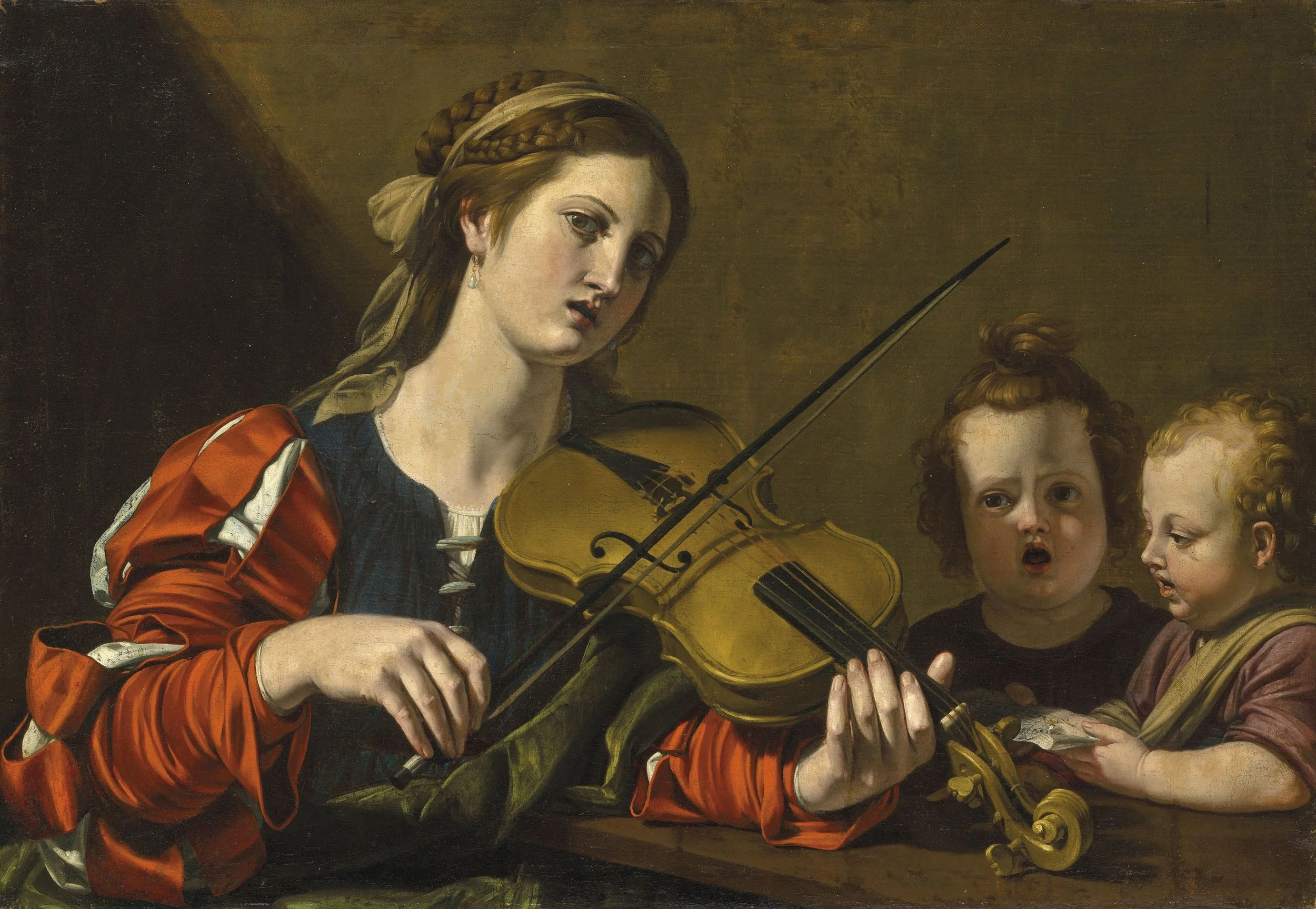
Talent - Nicholas Tournier
The Romantics completed the transformation. Genius became a sacred fire burning in the solitary artist — Beethoven glowering, Byron brooding, Chatterton expiring photogenically in his garret. Then science arrived to put the fire in a laboratory.
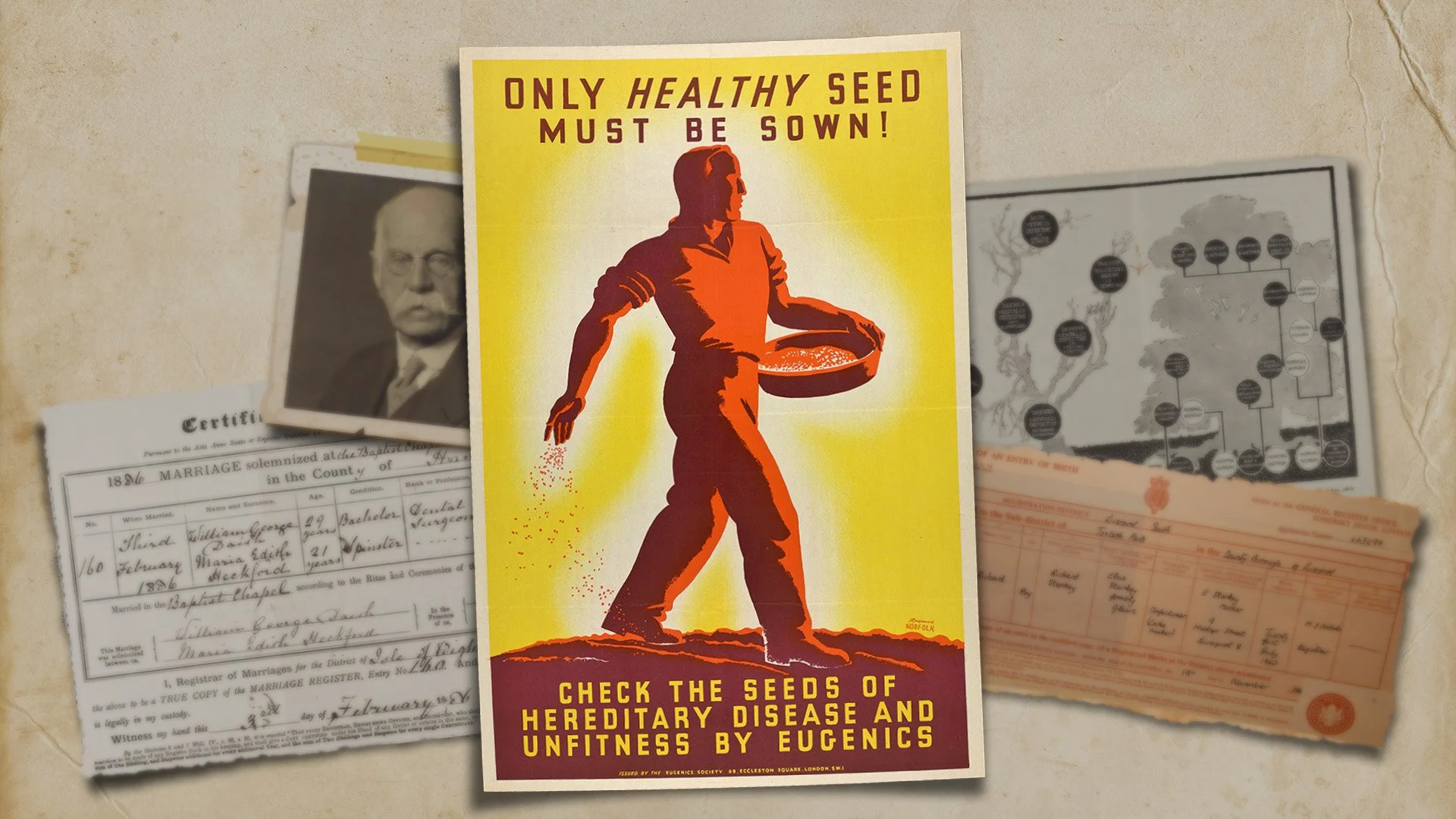
In 1869 Francis Galton published Hereditary Genius, tracing eminent judges, statesmen and scientists through their family trees and concluding that ability ran in the blood, like the shape of a nose. He popularised the phrase "nature versus nurture" and later coined the word "eugenics," and we know where that road led. The irony is exquisite. Galton's cousin was Charles Darwin, who wrote to congratulate him on the book — and then added, with characteristic mildness, that he had always maintained that, "excepting fools, men did not differ much in intellect, only in zeal and hard work." Two members of the same remarkable family, reading the same evidence: one saw breeding, the other saw graft. Darwin, looking at himself, saw patience. Galton, looking at other people, saw pedigree.
Nietzsche spotted the trick a few years later. We call someone a genius, he suggested, partly out of vanity: if their gift is a miracle, we are spared the uncomfortable business of comparing ourselves with them. Calling talent "innate" is often less a scientific claim than a psychological convenience. It turns a challenge into an alibi.
And so, by the end of the nineteenth century, talent had made a remarkable journey: from a sack of silver, to a loan from God, to a visiting spirit, to a personal possession, to a family heirloom stored in the blood. At every stage it mirrored the age's idea of the self. What nobody had yet done was measure it. The twentieth century would try — with clipboards, stopwatches, brain scanners and, at one memorable point, a jar containing Albert Einstein's brain.
Part Two — Practice Makes Perfect* (*Terms and Conditions Apply)
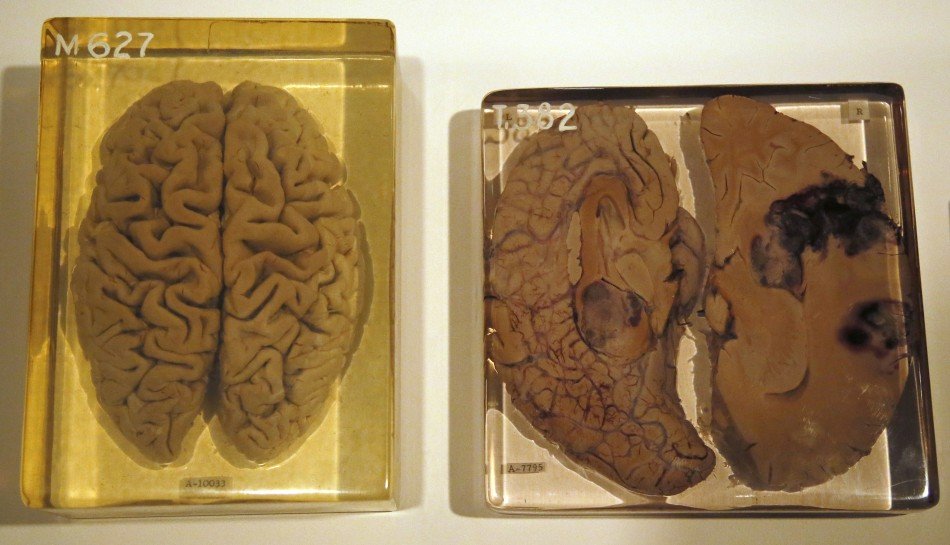
When Albert Einstein died in Princeton in April 1955, the pathologist on duty, Thomas Harvey, removed his brain and took it home. For decades it travelled with him around America in jars, sliced into a couple of hundred blocks, at one stage stored in a cider box. What did the world's most famous organ reveal? An unusual fold here, a few extra support cells there — findings so modest and contested that the main conclusion is that genius does not show up as a bulge. It was the perfect twentieth-century quest. Having moved talent from heaven into the blood, we now went looking for it in tissue.
Or in test scores. In 1921 the Stanford psychologist Lewis Terman began following around 1,500 Californian children with exceptionally high IQs — known, with affection, as the "Termites." They grew up to be lawyers, doctors and professors, which is to say they did very nicely. None won a Nobel Prize. Two boys who sat Terman's tests and failed to make the cut, William Shockley and Luis Alvarez, both went on to win the Nobel Prize in Physics. The test measured something real; it simply wasn't the thing it promised. It was rather good, however, at finding children from comfortable homes whose teachers liked them.
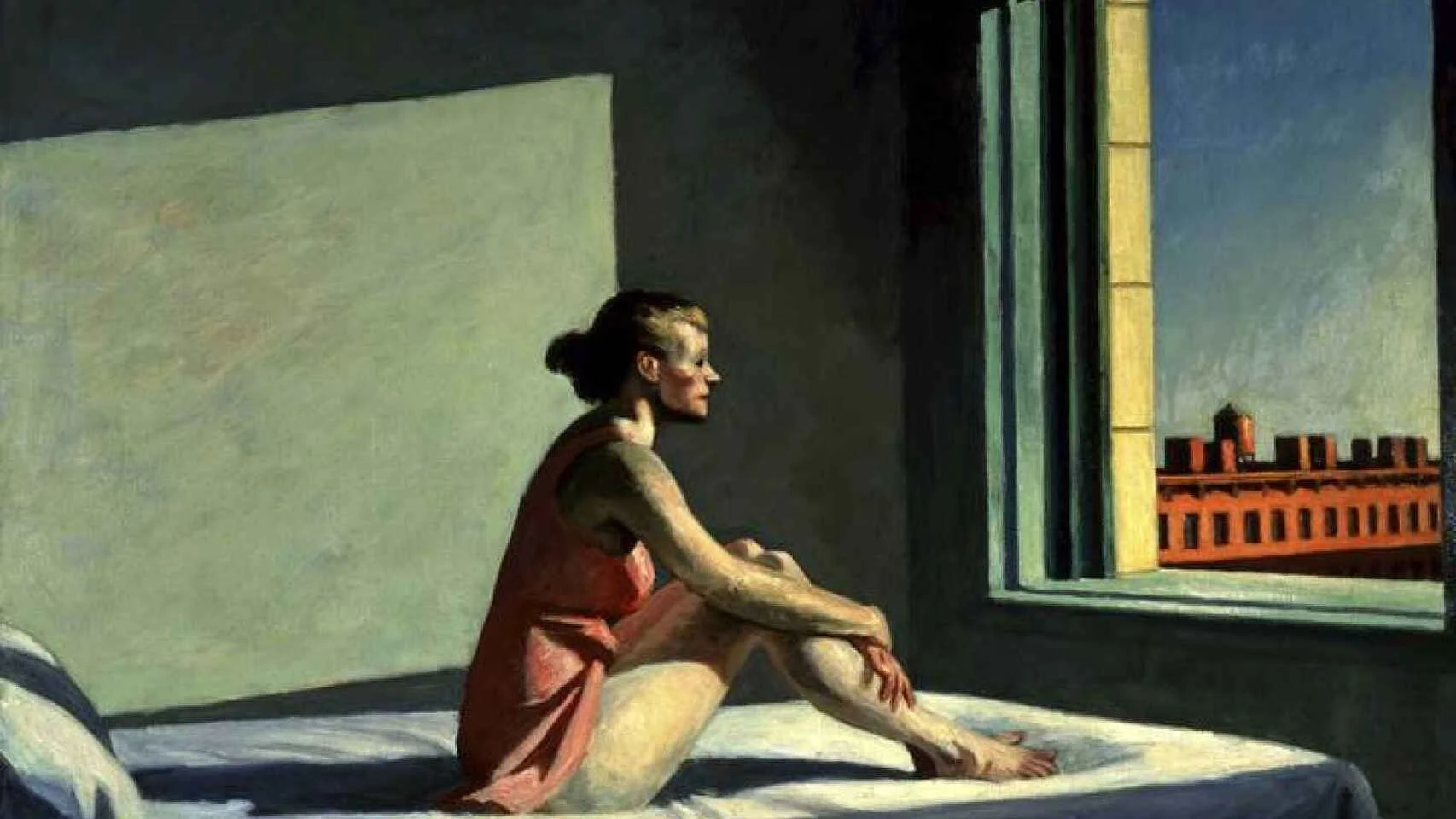
The great rebuttal to the single number came in 1983, when Howard Gardner published Frames of Mind and proposed that intelligence comes in several kinds: linguistic, logical-mathematical, spatial, musical, bodily-kinaesthetic, interpersonal and intrapersonal, with a naturalist intelligence added later. The question shifted from "How smart are you?" to "How are you smart?" In Creating Minds Gardner illustrated the idea with seven modern masters, each a virtuoso of a different intelligence: Einstein, Picasso, Stravinsky, T.S. Eliot, the dancer Martha Graham, Freud and Gandhi. Psychometricians grumble — and not without reason — that the intelligences overlap and resist independent measurement, and schools mangled the theory into "learning styles," which Gardner has politely disowned. But its social value was enormous. It widened the club. It gave a name to the fifth meaning of talent — the distinctive combination of strengths — and told a generation of children who could draw, dance or read a room that they were not merely bad at algebra.
Then came the stopwatch. In 1993 the Swedish psychologist Anders Ericsson and colleagues studied violinists at a Berlin music academy, grouping them by how good their teachers judged them to be. The best had, by the age of twenty, accumulated roughly 10,000 hours of solitary practice; those heading for careers as music teachers had about half that. What mattered, Ericsson argued, was not mere playing but deliberate practice: effortful work at the edge of one's ability, designed around specific weaknesses, with immediate feedback, usually guided by a teacher — and, crucially, not much fun. Practising the bits you can already play is pleasant. It is also, in Ericsson's terms, a hobby.
In Peak, written with Robert Pool, Ericsson went further and argued that, height and body size aside, innate talent had never been convincingly shown to set the ceiling on expert performance. Malcolm Gladwell turned the research into the "10,000-hour rule," a phrase Ericsson spent years trying to retire: there is no magic number, and quantity without quality is just repetition with a better press release.
The most spectacular case for practice was raised in a Budapest flat. In the 1960s the educational psychologist László Polgár courted his future wife Klára by letter, outlining a proposal to raise geniuses: any healthy child, he believed, could become exceptional with early, intensive, loving training. They had three daughters and chose chess, partly because results could be measured objectively. Susan became a world champion and one of the first women to earn the grandmaster title through tournament play. Sofia produced a tournament performance in Rome so dazzling it is still discussed. Judit became a grandmaster at fifteen, younger than Bobby Fischer, and is the strongest woman ever to play the game; in 2002 she beat Garry Kasparov. An experiment with a sample of three, conducted by a chess-mad father on children who shared his genes, is not quite a controlled trial. But it is a very good story.
For the cautionary tale, meet Dan McLaughlin, an American photographer who in 2010, at the age of thirty and having barely held a club, resolved to put 10,000 hours of deliberate practice into golf and turn professional. After some six thousand hours he had a handicap that would make most club golfers weep with envy. Then his back gave out, and the plan ended well short of the tour. In 2014 a meta-analysis by Brooke Macnamara, David Hambrick and Frederick Oswald put numbers to the suspicion: deliberate practice explained about a quarter of the differences in performance in games such as chess, around a fifth in music and sport, and very little in education and the professions. Practice matters enormously. It is just not the whole bill.
Nowhere is the bill's other half clearer than in sport. Eero Mäntyranta, the Finnish cross-country skier who won seven Olympic medals in the 1960s, was long whispered about because his blood was so rich in red cells. Decades later, researchers found that he and many of his relatives carried a rare mutation that made their bodies respond far more strongly to the hormone EPO. He had, in effect, been born doping. Practice cannot grow you a wingspan like Michael Phelps's or the extra inches of an NBA centre. Sport is also the only arena that openly argues about which natural advantages are fair — the long and painful controversy over athletes with naturally high testosterone, such as Caster Semenya, is that argument in its starkest form.
Neuroscience, meanwhile, has made the brain itself look less like a fixed inheritance and more like a work in progress. Eleanor Maguire's studies of London taxi drivers found that the posterior hippocampus — a region involved in spatial memory — was larger in drivers who had mastered "the Knowledge," and a later study watched it grow in trainees who qualified. String players show an enlarged brain map for the fingers of the left hand. Practice does not merely use the brain; it remodels it. Van Gogh, who took up art seriously at twenty-seven and whose early drawings are heroically clumsy, spent the next decade copying, drilling and producing work at a ferocious rate — and the clumsiness became the style.
Yet the genes return through the back door. A large study of Swedish twins led by Miriam Mosing and Fredrik Ullén found that the willingness to practise music was itself partly heritable, and that when one identical twin practised far more than the other, the keener twin was no better at basic musical discrimination. The economists William Dickens and James Flynn described the mechanism as a multiplier: a slight early aptitude attracts praise, which prompts practice, which builds ability, which attracts more praise. Talent is an invitation; practice is the acceptance; and the two quickly become impossible to tell apart. Even Srinivasa Ramanujan, the self-taught mathematical prodigy whose letter astonished G.H. Hardy in 1913, had spent years working obsessively through a dense compendium of thousands of theorems. Miracles, it turns out, do their homework.
Which brings us back to the pattern. Research by Chia-Jung Tsay found that musicians who insist effort matters most nonetheless rate a performer more highly when told she is a "natural" rather than a "striver." We preach practice and worship gifts. About ourselves we tell the opposite story: our successes are hard-won, our failures innate — "I'm just not a maths person." Both stories protect the ego. Across three thousand years the rule holds remarkably well: the closer talent is to us, the more we call it work; the further away, the more we call it a gift.
So, is talent innate, or can practice overcome differences in natural ability? The honest answer is that the question is badly posed. Biology plainly sets some limits — on height, haemoglobin, wingspan — and shapes the first two meanings of talent, the head start and the speed of learning. But the last three — developed ability, exceptional performance and that distinctive alloy of strengths — are built, slowly, by practice, teaching and opportunity. And almost nobody reaches their biological ceiling. For most of us, in most of life, the ceiling is not the problem. The floor is.
Alice in Wonderland - Tenniel
Philosophically, the ancients were half right. Talent is not quite ours to own. It lives in the meeting between a person, a practice and a world that offers the chance. It is less a noun than a verb.
Socially, that verb has a grammar of privilege. Research by Alex Bell, Raj Chetty and colleagues on America's "Lost Einsteins" found that children born into the richest families were around ten times more likely to become inventors than children from the bottom half — even among those with similar maths scores in childhood — and that growing up around inventors greatly raised the odds. Potential is spread widely; opportunity is not.
Which returns us to the man with the spade. The master in the parable handed out talents "according to ability." We tend to hand them out according to postcode. And the third servant buried his coin not out of laziness but fear — the fear of a man who believes his allotment is fixed and his master unforgiving. A culture that tells children talent is a fixed inheritance teaches them to dig. Somewhere in Blombos Cave, 75,000 years ago, someone without a teacher, a test or a biographer picked up a sharp stone and practised a line. The real waste in the story was never the servant who had only a little. It is every talent we bury — our own, out of fear, and other people's, out of indifference.