On imagination, creativity, and the animal that cannot leave the world alone
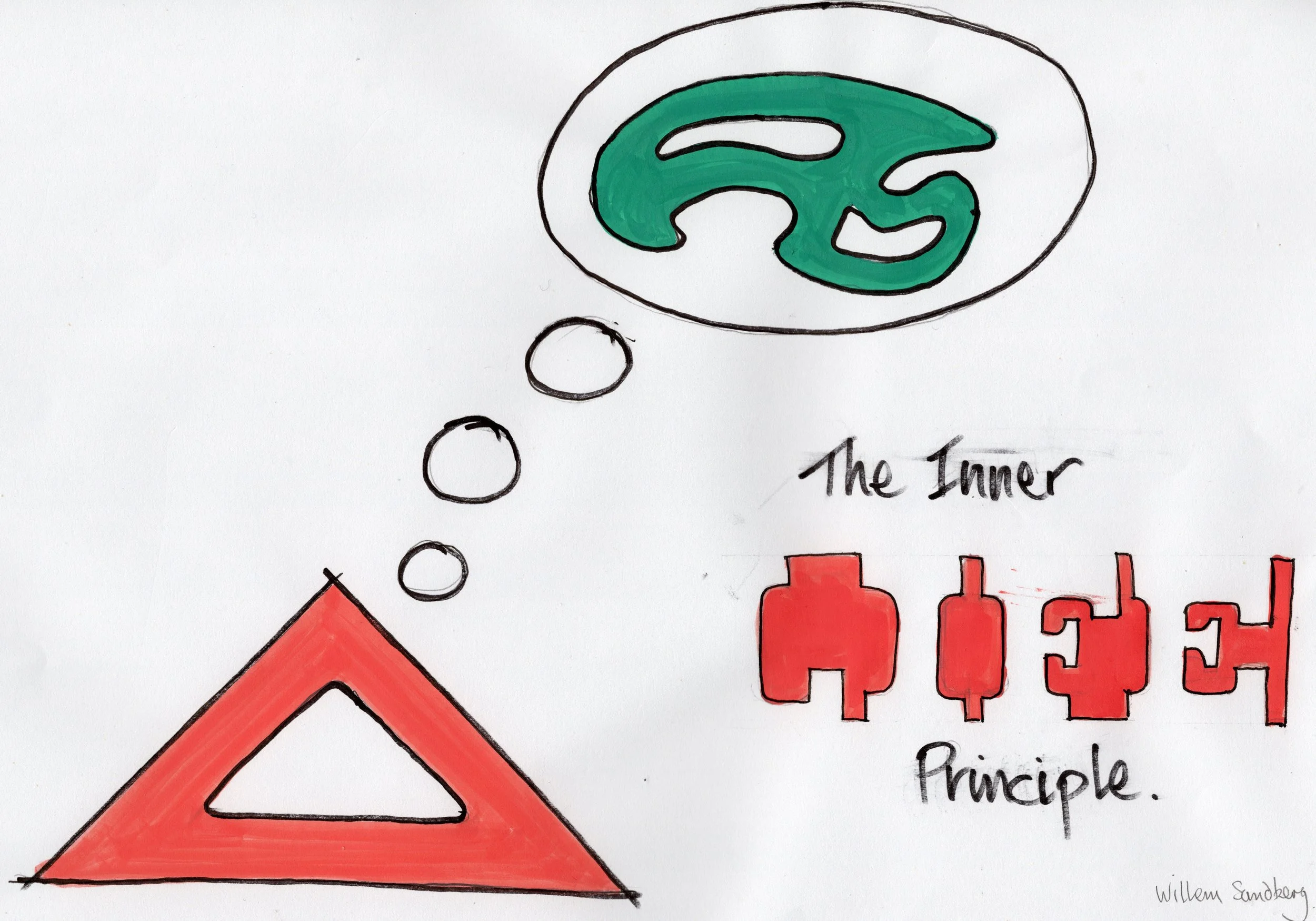
In the sixth of his Meditations, René Descartes set his readers a small geometrical party trick. Picture a triangle, he suggests. Easy: three lines, a little rigid, faintly smug. Now picture a chiliagon, a figure with a thousand sides. You can define it perfectly well. You can prove things about it. Given enough patience and a very large protractor, you could even draw one. What you cannot do is see it. Whatever the mind's eye produces is a blurry circle with ambitions.
From this Descartes drew a momentous conclusion. Understanding – the pure grasp of a concept – is the essence of the mind; imagination, the business of making pictures, is an optional extra, a sort of in-flight entertainment system bolted onto the soul. It was one of the most consequential demotions in the history of ideas, and we have been paying for it ever since: in our schools, in our boardrooms, and in our stubborn suspicion that anyone staring out of a window is not really working.
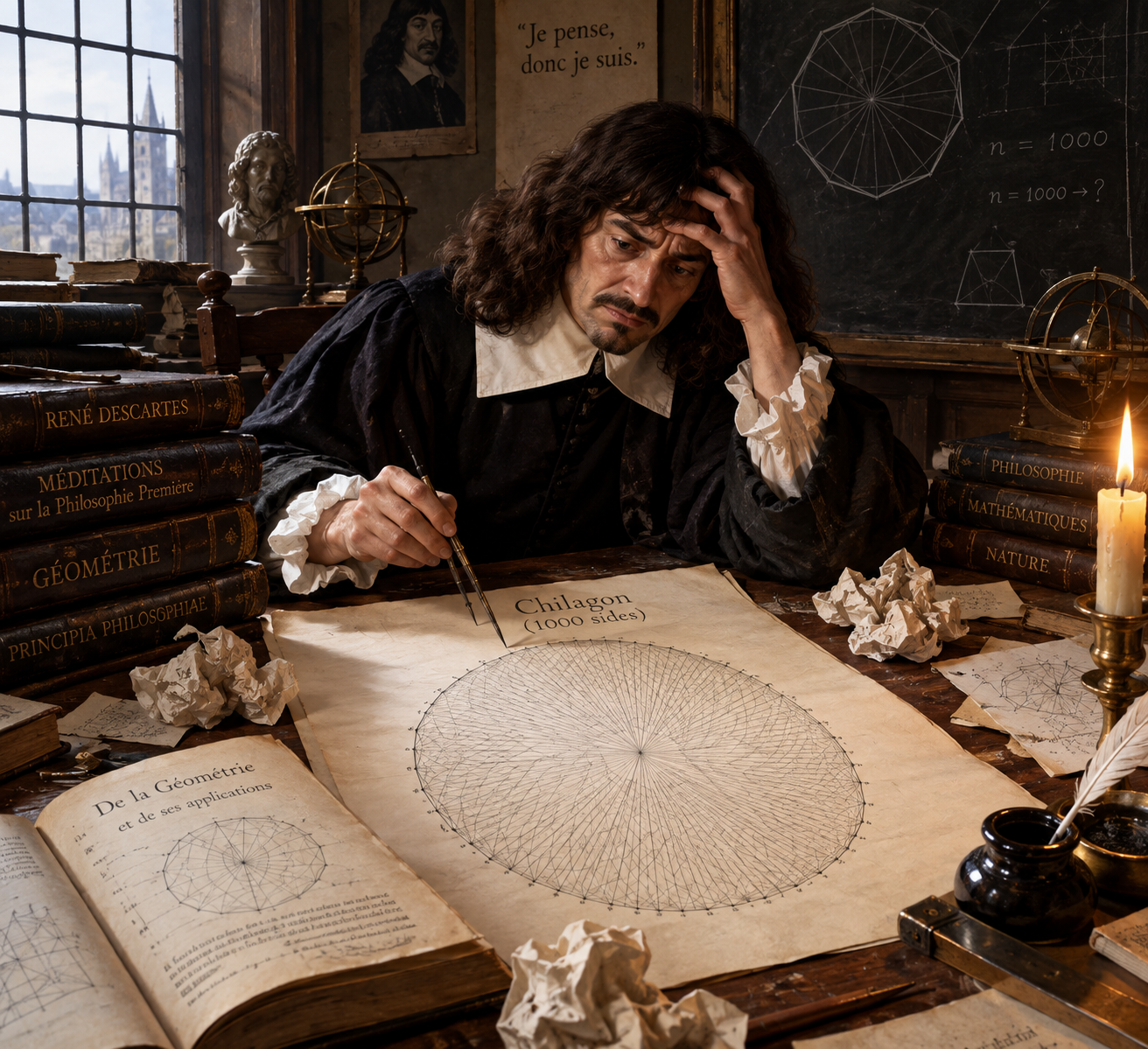
AI generated Image
This post is an attempt to reverse the demotion. It asks what imagination is, what creativity is, where the two overlap – and why I believe the capacity they share is the most human thing about us.
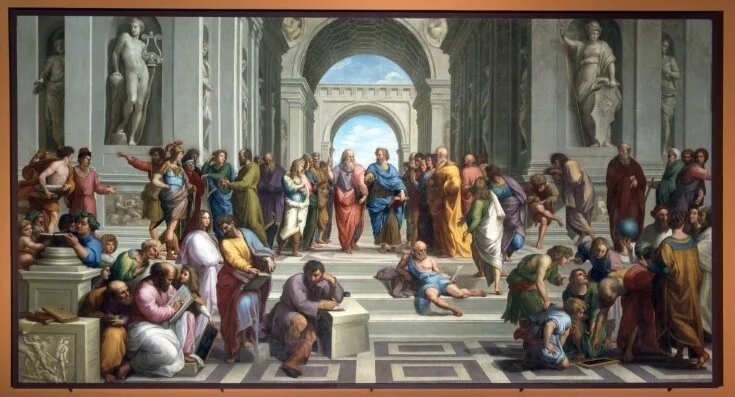
Descartes, it should be said, was arguing against a very old consensus. Aristotle had placed imagination – phantasia – at the heart of the mind. In De Anima he insists that the soul never thinks without a mental image. Phantasia is the bridge between the raw rush of the senses and the orderly work of thought, the faculty that allows an image to outlive the moment that produced it. In the Poetics he went further, observing that the poet's task is not to report what has happened, but what might happen – which is why, to the lasting irritation of historians, he judged poetry the more philosophical of the two. Here, in embryo, is the distinction this whole essay turns on: imagination entertains the possible; creativity commits to it.
It was Immanuel Kant who staged the rescue. In the Critique of Pure Reason, he describes imagination as "a blind but indispensable function of the soul", without which we would have no knowledge at all. For Kant, imagination is not decoration but construction: it is what synthesises the chaos of sensation into a world we can recognise. He distinguishes a reproductive imagination, which recalls and recombines, from a productive imagination, which generates. And in the Critique of Judgement, he locates our experience of beauty in the "free play" of imagination and understanding – two faculties larking about together without either insisting on being in charge. Genius, for Kant, is the talent that gives the rule to art. The creative mind does not follow the rulebook; it writes the next edition.
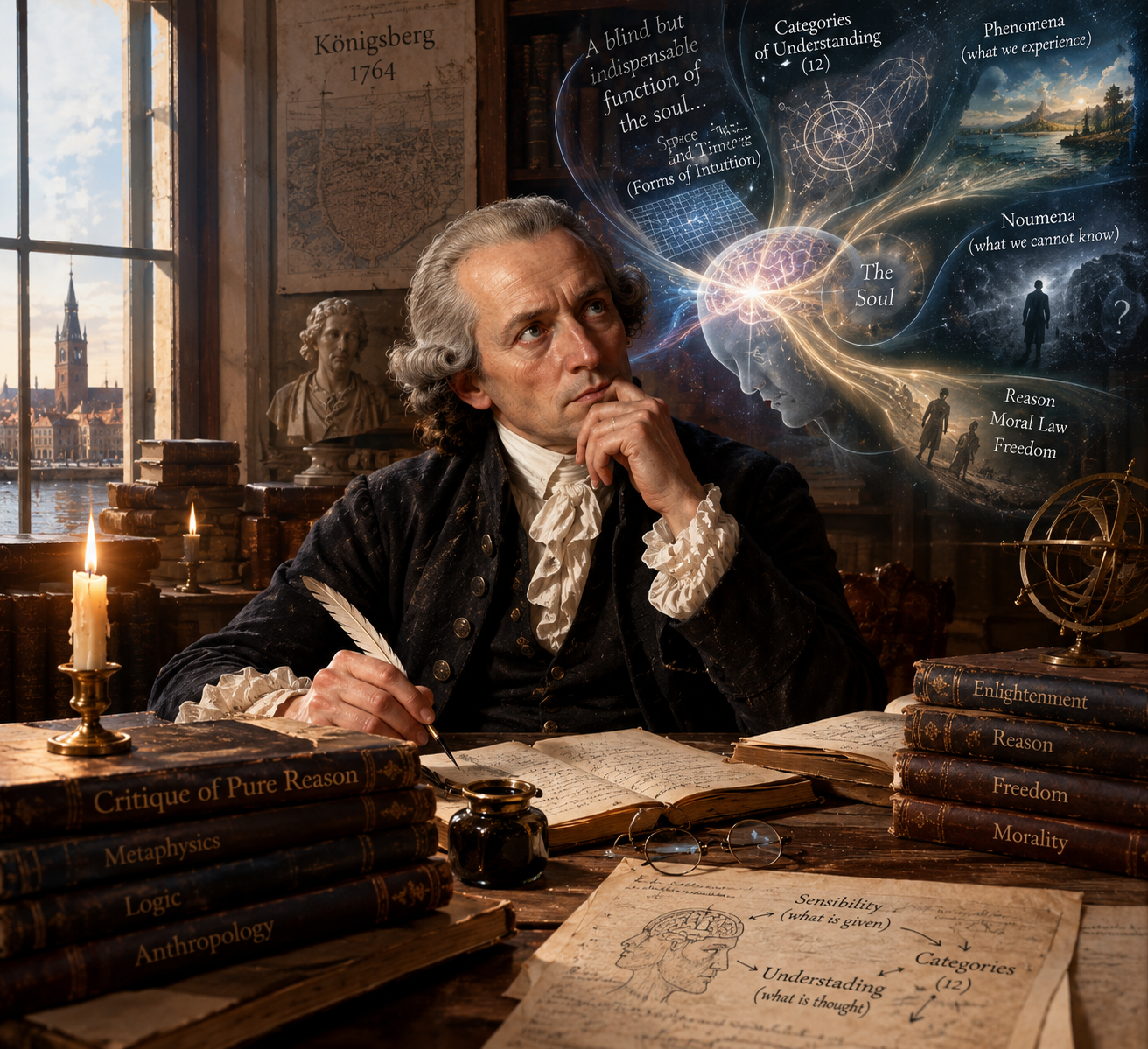
AI generated image
Which leaves us with a word doing an alarming amount of work. In a 2003 essay for the British Journal of Aesthetics, the philosopher Leslie Stevenson counted twelve distinct conceptions of imagination, admitting with admirable candour that a proper survey of the subject would take a lifetime he had mostly spent on other things. His list runs from the humble to the exalted. At one end sit the everyday senses: thinking of something absent but real (your car keys, wherever they are); thinking of what is possible (the kitchen, painted green, (mine’s purple!!)); the liability – his wonderfully precise word – to believe in something that isn't there (the burglar who turns out to be a dressing gown); thinking of the openly fictional (Mr. Darcy); entertaining mental images; thinking of anything at all; the non-rational drift of the mind; even the ordinary act of perceiving objects as solid things in space. At the other end sit the aesthetic senses: the ability to appreciate beauty without asking what it is for; to create works that invite such appreciation; to recognise what reveals something about the meaning of human life; and, finally, to create works that do the same.
Read the list in order and something striking happens. It climbs a ladder, from receiving the world to remaking it, and only on the upper rungs does imagination start producing things. That is where the overlap lies. Imagination is the larger country – every one of us lives there, every time we worry, plan or misplace the keys. Creativity is the province in which imagination acquires consequences. Psychologists define it with rather less poetry: an idea must be both original and effective, novel and useful. A chiliagon you merely conceive is imagination. A chiliagon you build – as a dome, a lampshade, a plot twist – is creativity.
The modern science of all this began, appropriately enough, with a complaint. In 1950 J.P. Guilford used his presidential address to the American Psychological Association to point out that his discipline had almost entirely ignored creativity. He gave us the idea of divergent thinking, and with it the most gloriously absurd test in psychology: name as many uses as you can for a brick. (Doorstop. Paperweight. Very disappointing pillow.) Three-quarters of a century later, researchers are still handing people bricks – only now the people are lying inside scanners or wired up to electrodes.
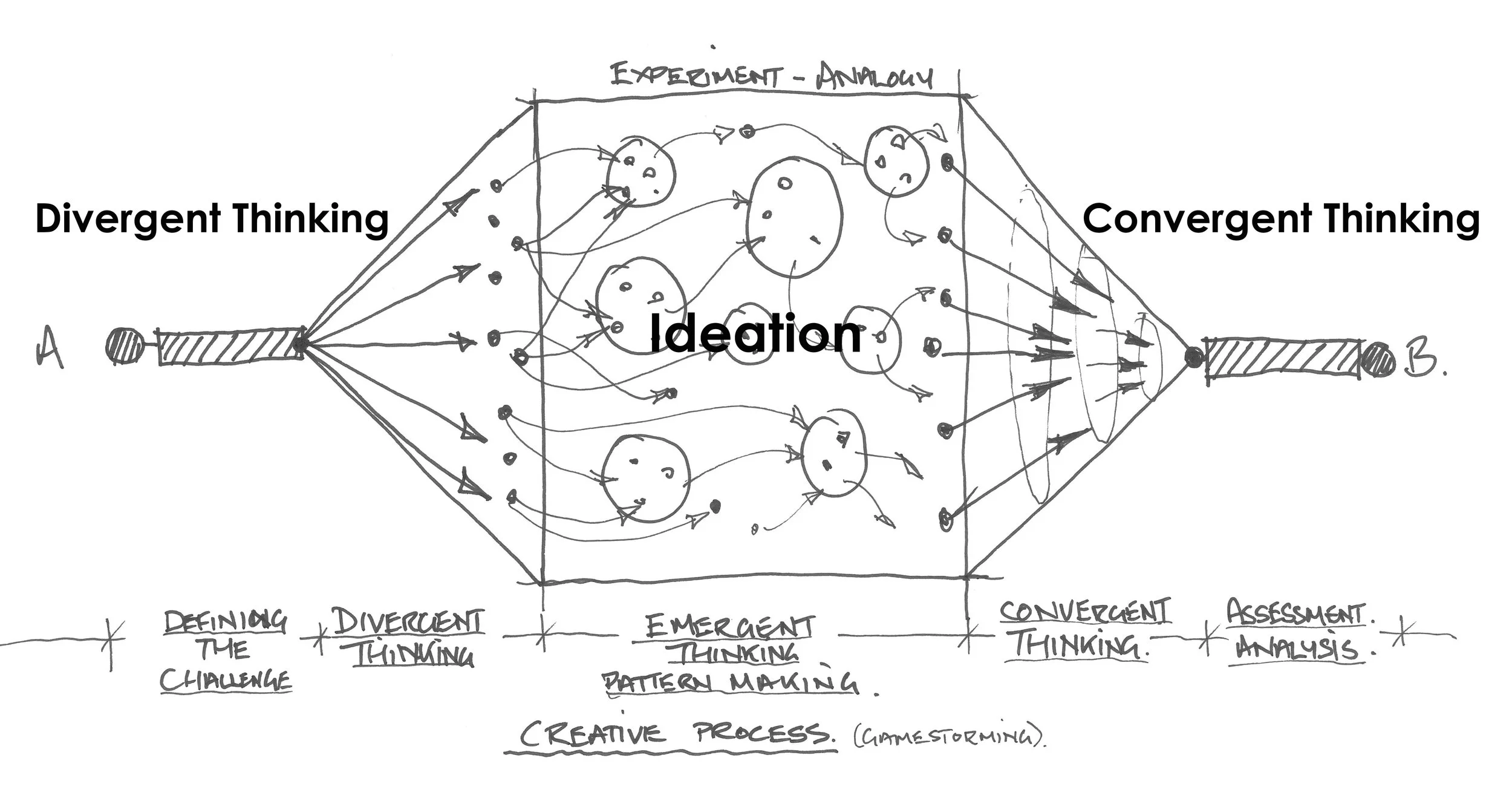
What they have found is delightful. The brain's default mode network, first described by Marcus Raichle in 2001, was long dismissed as the 'task-negative' network: the lights left on when nobody is home, humming away during daydreams and idle mind-wandering. It turns out to be imagination's engine room. In 2024 a team led by Ben Shofty recorded directly from electrodes implanted in the brains of thirteen epilepsy patients, then used gentle electrical stimulation to disrupt the network for a moment. Their volunteers' uses for the brick became measurably less original. For the first time, imagination had been caught red-handed – switched off and missed.
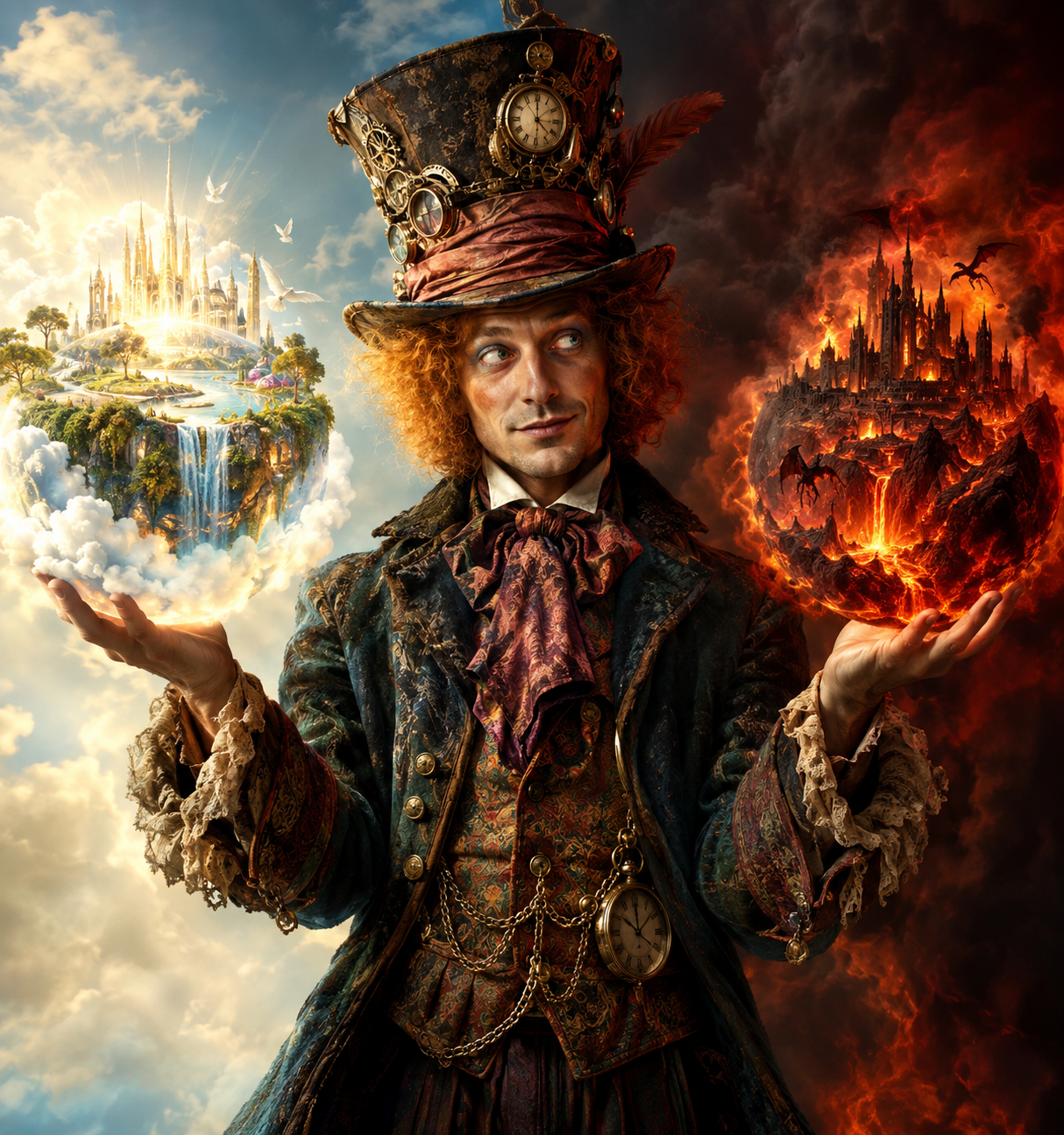
But wandering alone is not creativity; it is merely a very pleasant way to miss your stop. The more important finding concerns the conversation between the default network and the executive control network – the brain's editor, critic and compliance department. In early 2025 a study in Communications Biology pooled brain scans from more than 2,400 people in Austria, Canada, China, Japan and the United States, the largest investigation of its kind, and found that creative ability tracks how fluidly the brain switches between the two. The dreamer proposes; the editor disposes; the creative mind is the one that keeps both at the table. Kant's "free play" of imagination and understanding, it seems, has an address in the cortex.
AI generated image
John Cleese arrived at the same conclusion without an MRI scanner, which is entirely typical of him. In a celebrated 1991 lecture he distinguished an open mode – relaxed, playful, curious – from the closed mode in which we actually get things done, and insisted that creativity needs both, in that order: you cannot evaluate an idea you have never had. He recommended building an oasis of protected time and space in which the shy creature of the imagination might dare to poke its head out. Chris Griffiths, whose Creative Thinking Handbook treats creativity as a set of learnable techniques rather than a lightning bolt reserved for the chosen few, draws the practical lesson: if creativity is a process, it can be taught, practised and improved – like tennis, but with fewer pulled hamstrings.
Jonah Lehrer, in Imagine, popularised the elegant work of Mark Beeman and John Kounios, who found that just before a moment of insight the brain produces a burst of alpha waves over the visual cortex – as though it were briefly closing its eyes to hear itself think. Lehrer's book was later withdrawn when it emerged that he had invented some of his quotations: a cautionary tale about what happens when the default network is allowed to file copy without the executive network checking it first.
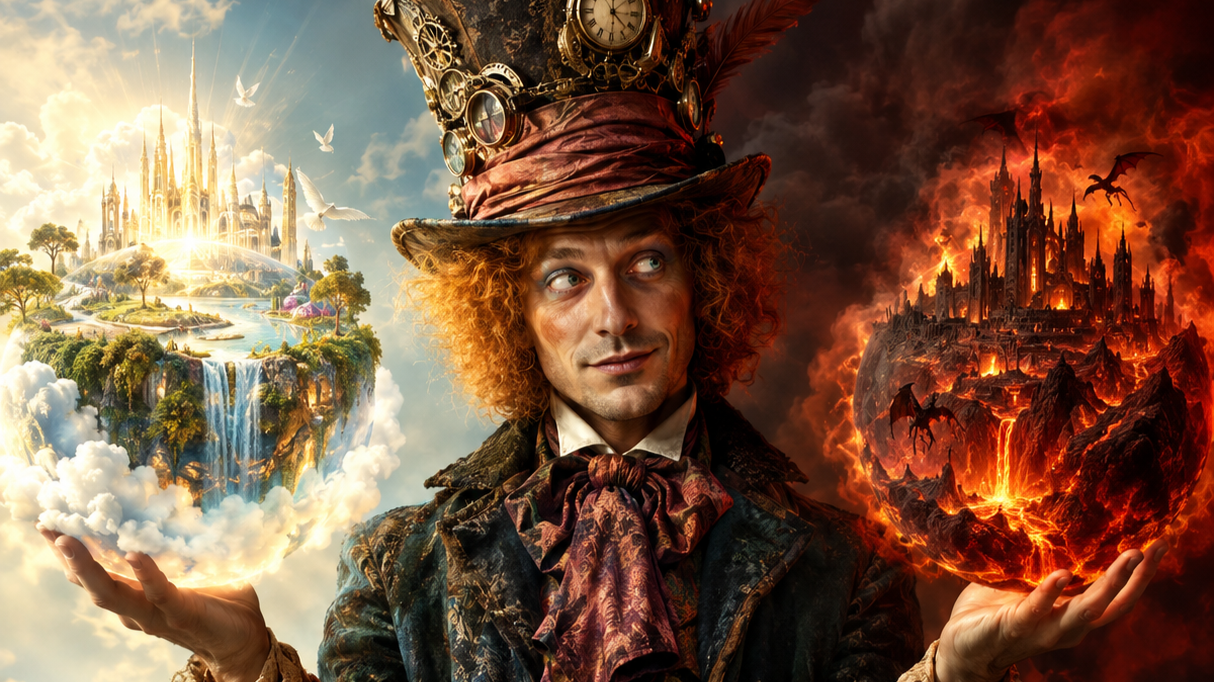
What, then, are the philosophical stakes? Descartes gave us a creature defined by thinking: cogito, ergo sum. I would propose a friendly amendment. What distinguishes us is not merely that we think, but that we think otherwise – that we can hold the world as it is in one hand and the world as it might be in the other and feel the gap between them as an invitation. Some seventy-five thousand years ago, someone in Blombos Cave on the southern Cape scratched a lattice of lines into a piece of red ochre. It had no obvious function. It solved no problem. It was simply a mark that did not exist until a human being imagined it and then – the crucial second step – decided that it should. Every cathedral, symphony and spreadsheet macro since has been a footnote to that gesture.
This is also why creativity is a moral as well as an aesthetic capacity. To imagine otherwise is the root of empathy (what would it be like to be her?), of reform (why must it be this way?) and of hope itself. Stevenson's twelfth conception – the creation of works that say something deep about the meaning of human life – is not an ornamental summit at the top of the ladder. It is the reason for the climb. A machine can now generate a thousand uses for a brick in under a second. What it cannot yet do is care which of them matters, or why.
Which brings us, as these things eventually must, to money. In an earlier post I argued that creativity and optimism are the twin engines of an economy; the case has only strengthened since. Sir Ken Robinson spent his career warning that we educate children out of their creativity, when it ought to be treated as seriously as literacy. Daron Acemoglu – who shared the 2024 Nobel prize in economics with Simon Johnson and his Why Nations Fail co-author James Robinson (no relation to Sir Ken, though the two Robinsons would have got on famously) – showed that nations prosper when their institutions are inclusive: when ordinary people are free to try new ideas, keep the rewards, and unleash the creative destruction that sweeps away the old. Extractive elites fear imagination, because imagination is where their replacements come from. A school system that drills out divergent thinking is an extractive institution of the mind, and a country that closes its art rooms to fund more test preparation is quietly deciding to become poorer. Creative education is not a luxury we indulge once the economy is secure. It is how economies become secure in the first place.
Descartes was right about one thing: none of us can picture a chiliagon. But we can do something he never quite gave us credit for. We can imagine that it might be useful, sketch it badly, argue with ourselves about it, try again – and one day stand beneath a thousand-sided dome and wonder how anybody ever thought of it. That, in the end, is what a human being is: not merely the animal that thinks, but the animal that cannot leave the world alone.