or how we go from meaningless data to meaningful motivation.
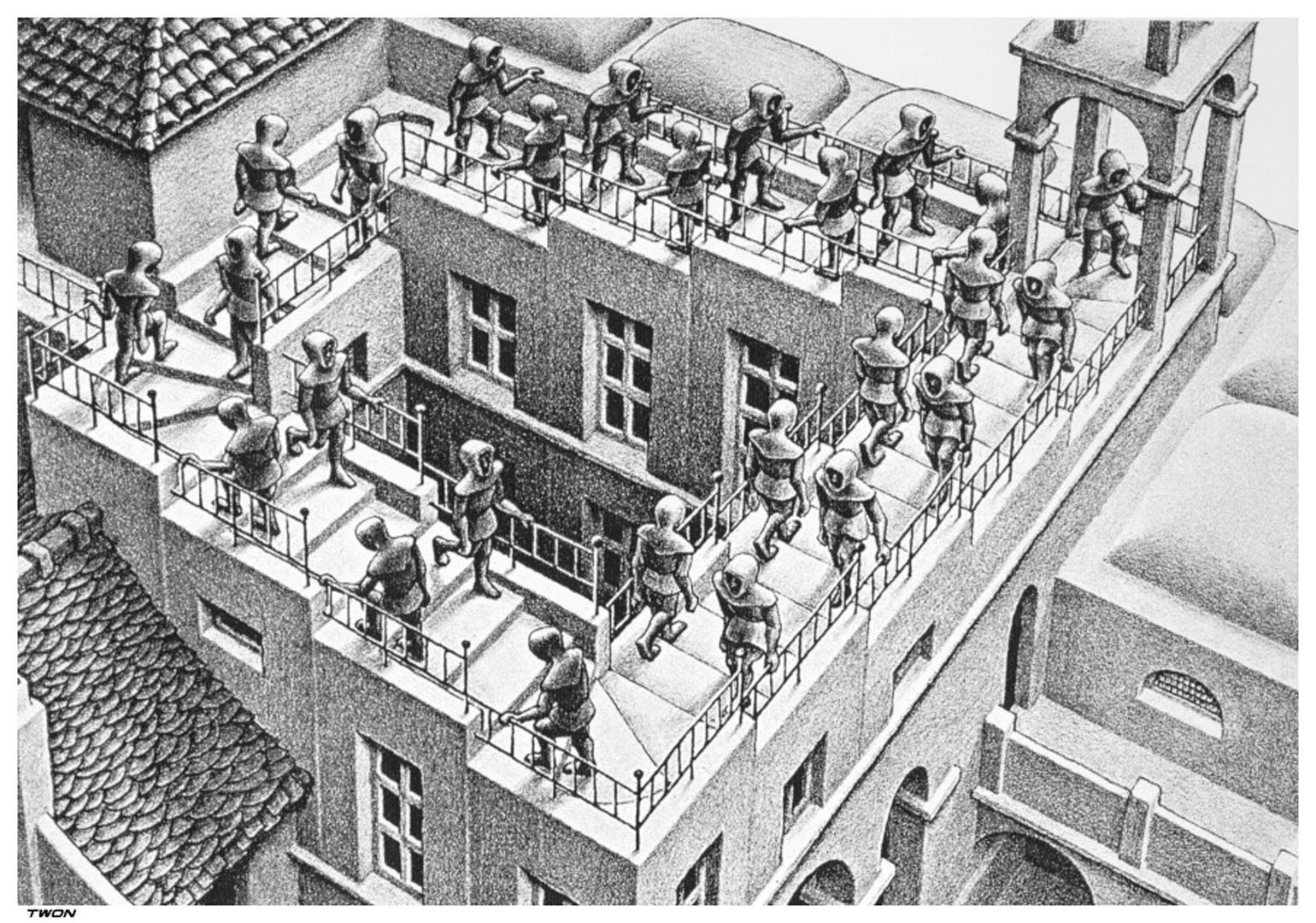
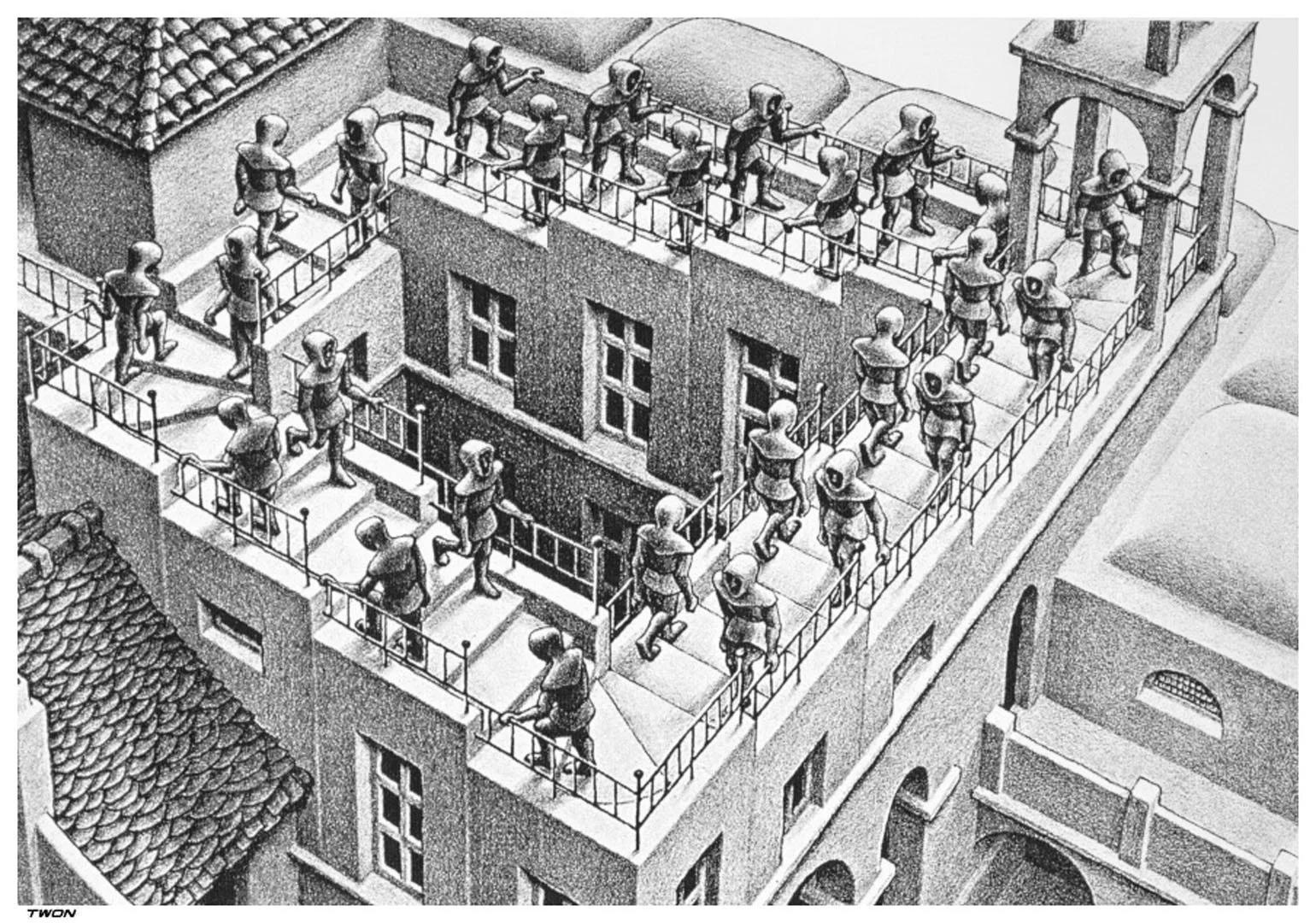
Look at M. C. Escher's Ascending and Descending for long enough and something odd happens. A line of monks climbs a staircase. Follow the steps and you end up back where you started — but somehow higher. It's a trick. The geometry doesn't work in real life. You know this. And yet your eye keeps climbing anyway. It won't accept the flat truth of the picture — just ink on paper, nobody going anywhere — and insists on a story instead: effort, progress, arrival. This isn't a fault in your eyesight. This is not a design flaw in the human visual system. It is the whole operating principle of the human mind, and it is, I want to argue, also the operating principle of every story ever told.
The brain cannot leave raw information alone. Given a scattering of dots, it draws lines between them. Given noise, it hears a voice. Michael Shermer, in The Believing Brain, calls this patternicity: the tendency to find meaningful patterns in data, whether or not any meaning is actually there. Stare at a cloud long enough and you’ll find a face in it. Pair this with what he calls “agenticity”: once we've found the pattern, we assume something — or someone — put it there on purpose. Put those two together and you have an organism that turns meaningless static into story with a plot and a villain. Evolution, in its characteristically unsentimental way, rewarded the paranoid pattern-finder over the placid literalist. We are all, in this sense, descended from the ancestors who saw faces in the dark and ran.
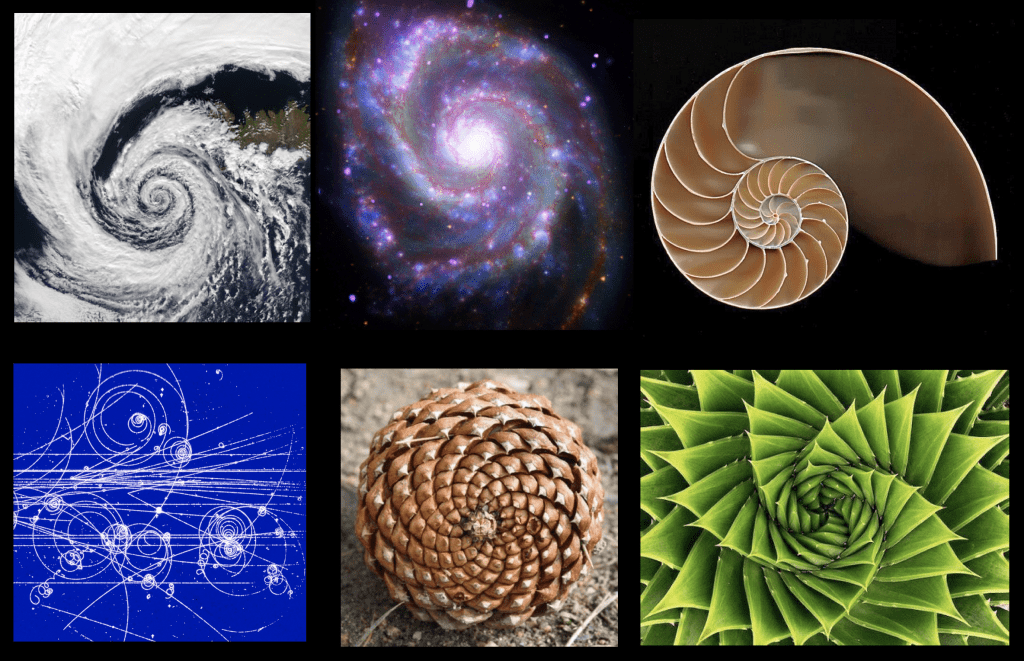
Escher, tellingly, was not a mystic but an obsessive draughtsman of tessellation and symmetry — a man who spent his life proving, tile by interlocking tile, that pattern is not merely something the mind imposes on the world but something the world half-offers up for the taking. Which is where Marcus du Sautoy's Blueprints enters the conversation and complicates it usefully. Du Sautoy is not interested in debunking pattern as illusion; he's interested in the far stranger possibility that the golden ratio, prime numbers, and symmetry genuinely do underwrite both the honeycomb and the sonnet, that mathematics is less a human invention than a shared grammar between mind and cosmos. If Shermer explains why we're so trigger-happy about finding patterns, du Sautoy explains why so many of the patterns we find are, disconcertingly, actually there. A story, on this reading, isn't merely a psychological tic layered over meaningless data — it's the mind doing, in narrative form, exactly what it does in music and mathematics: locating the underlying structure and giving it a shape a human being can hold.
This is also how beliefs get made. We don't gather evidence, weigh it up, and arrive at a conclusion. We form a belief first — fast, emotional, intuitive and often unconscious — and only then go looking for reasons to support it. The evidence doesn't create the belief. It arrives afterwards, like a lawyer hired to defend a client who's already been found innocent in his own mind. Once the belief is in place, the brain gets very good at noticing anything that confirms it and very good at forgetting or ignoring anything that doesn't. This is why arguing someone out of a belief with facts so rarely works. The facts were never what put the belief there in the first place.
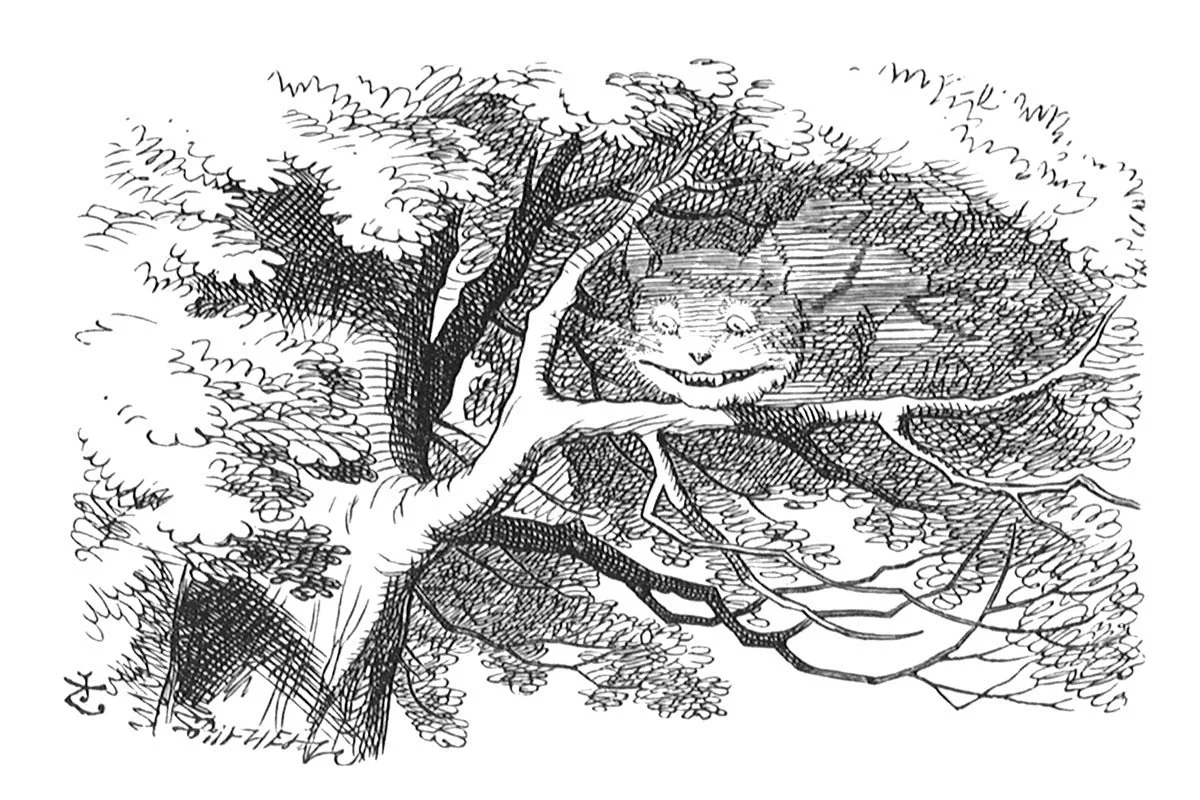
Push this machinery a little further and you get magical thinking: the sense that events are connected by hidden forces, that nothing is really a coincidence, that someone, somewhere, is pulling the strings. Magical thinking tends to flourish exactly where uncertainty is highest and control is lowest — which is why gamblers develop rituals, why sports fans wear the same "lucky" shirt for every match, and why, at a larger scale, societies under stress reach for conspiracy theories. A conspiracy theory is patternicity and agenticity working at full throttle: scattered, unconnected facts get stitched into a single hidden design, and someone is always found to be behind it. The pattern feels like a discovery. It is actually a story, built the same way all stories are built, just aimed at the wrong target.
None of this means patterns are always imaginary — though there's a separate discussion to be had about what reality is. Sometimes a pattern is already there, waiting to be found, and the difficulty is telling that case apart from the ones the mind invents.
That difficulty turns out to have an upside. Uncertainty is deeply uncomfortable for the brain — it's the same discomfort that pushes us towards magical thinking and conspiracy in the first place. Discomfort is also the raw material of creativity. You cannot see anything genuinely new while clinging to your existing assumptions; you have to first admit you don't know, and sit with not knowing, before a new pattern can form. Uncertainty is dangerous ground. It's also the only ground fertile enough to grow an original idea. Magical thinking and creative insight start in exactly the same place — an unresolved gap where the brain wants an answer — and only diverge depending on what happens next.
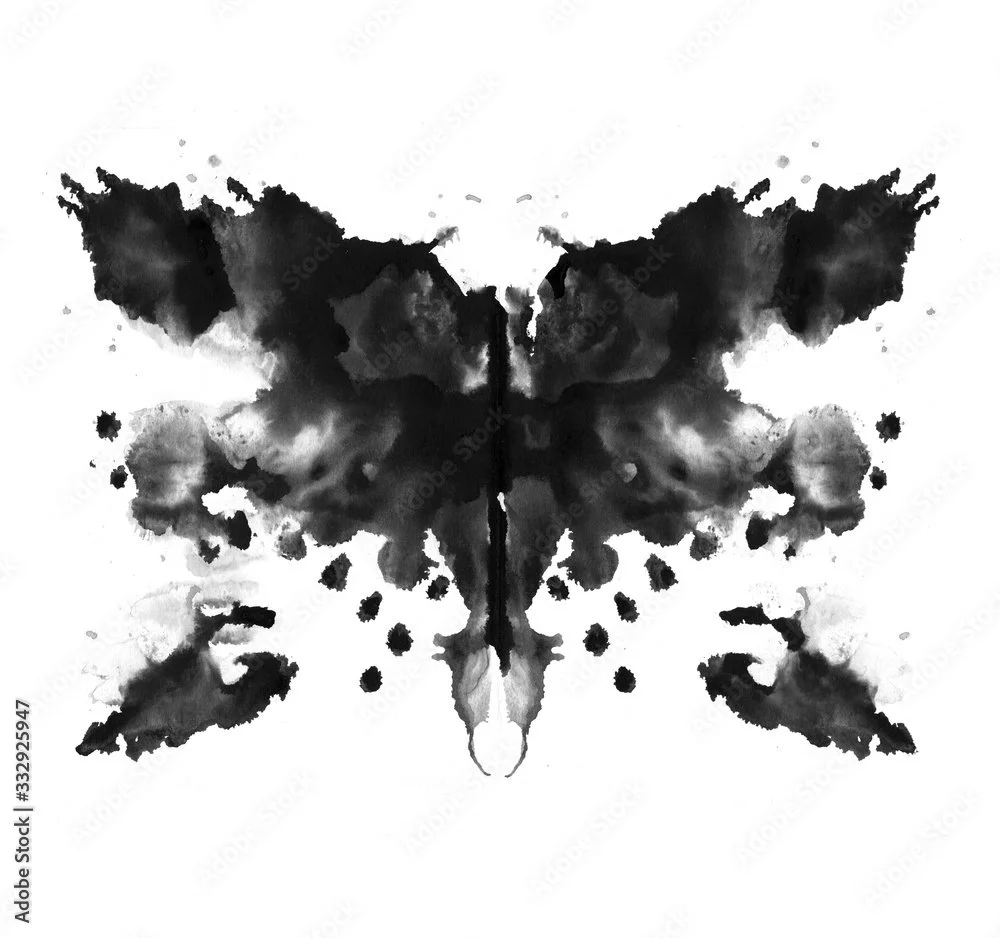
What happens next is a story. Lisa Cron, in Wired for Story, argues that narrative isn't decoration added to information after the fact — it's the actual format the brain uses to process experience in the first place. We don't remember bare facts. We remember what they meant, who wanted what, and what stood in the way. Jonathan Gottschall goes further in The Storytelling Animal: toddlers who can barely talk are already inventing pretend stories, and no society has ever been found, anywhere, without stories of some kind. Gottschall calls us Homo fictus rather than Homo sapiens — creatures who reach a conclusion first, a hypothesis, and build the story that makes it feel inevitable afterwards. Sounds like Shermer's beliefs-first, evidence-later model, arriving from a different direction.
Which brings us, as this series keeps insisting on bringing us, back to a cave on the South African coast. The ochre fragments at Blombos, crosshatched by hand some seventy thousand years before anyone had a word for "art," are usually filed under the heading of aesthetic origins — proof that we were decorating things before we were farming them. But they belong just as properly here, in a discussion of story, because a crosshatch is patternicity caught in the act: someone took a blank, meaningless surface and imposed order (story and meaning) on it, then — we can only assume — showed it to someone else, who understood. That second step, the showing, the meaning and the understanding, is the birth of narrative. A pattern becomes a story the moment it is offered to another mind as meaning something, and that transaction is, on the current archaeological evidence, older than agriculture, older than the wheel, arguably older than language as we'd recognise it. Whoever scored those first crosshatches was not, presumably, trying to communicate a fact. They were doing something closer to what Escher would do seventy millennia later with a lithography stone: making a pattern deliberately intricate enough that another mind would be compelled to stop, notice, and start supplying it with significance.
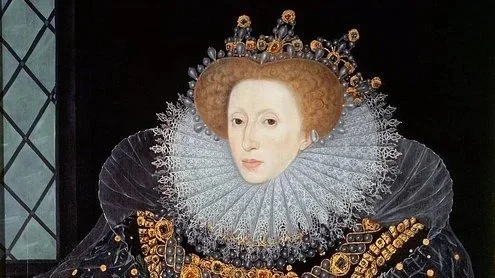
Nowhere is this transaction performed with more ruthless skill than in political oratory, which is really just patternicity and agenticity deployed with military precision. Elizabeth I at Tilbury in August 1588, addressing troops mustered against an Armada that had not yet been defeated and might not be. The facts on the ground were chaotic and genuinely terrifying: an unproven navy, an invasion fleet at large, a queen with no husband, no heir, and — by the political arithmetic of the age — no business commanding an army at all. What she gave her soldiers instead of facts was a story, one built on a single audacious pattern-break: I know I have the body of a weak and feeble woman; but I have the heart and stomach of a king. In one sentence she takes the most obvious "meaningless" datum in the room — her sex, which sixteenth-century logic insisted disqualified her from the very field she stood in — and reforges it into the engine of the narrative rather than its obstacle. The pattern she hands her troops isn't military, it's mythic: sovereign transcends body, and therefore England transcends circumstance. The Armada, as it happened, was largely undone by weather. Nobody remembers the weather!
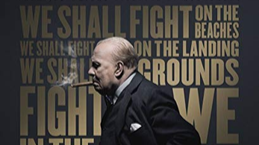
Winston Churchill, three and a half centuries later, was working the same machinery on an even more unpromising set of raw materials: the British Expeditionary Force in full retreat, Dunkirk a shambles, invasion a live and reasonable fear. Churchill's genius was never really rhetorical ornament — it was structural. He took a sequence of events that, reported flatly, spelled catastrophe, and imposed on them the oldest pattern in Gottschall's storytelling toolkit: trial, resolve, and the promise of a "finest hour" still to come. Blood, toil, tears and sweat isn't a description of the war so much as a contract of narrative expectation — it tells the audience what kind of story they're in, and therefore how to feel about the chapter currently unfolding. Neither monarch nor prime minister was lying, exactly. Both were doing precisely what the brain does: creating a narrative to unify a nation. A nation, like an eye tracing a lithograph, will climb toward almost any story that promises to arrive somewhere, provided the promise is delivered with enough conviction.
The last words of the film Darkest Hour were:
“He mobilised the English language and sent it into battle.”
So here is where the staircase leaves us. The brain that invents conspiracies out of loose threads is the very same brain that invents symphonies, discoveries and speeches that hold a country together — patternicity is not a fault to be fixed but a power tool with no safety switch, equally happy building a cathedral or a crop circle, and the only real difference is who's holding it and what they're pointing it at. Which is, admittedly, a slightly unsettling thing to learn about your own brain. But take comfort: you are, at this very moment, doing it to this sentence — hunting for the meaningful shape in a string of typed marks, assuming an intention behind it (there is!?), trusting there's a person up here who knows where the staircase leads (I don’t, by the way). There's just me, another monk on another impossible step, climbing because stopping was never really on offer.